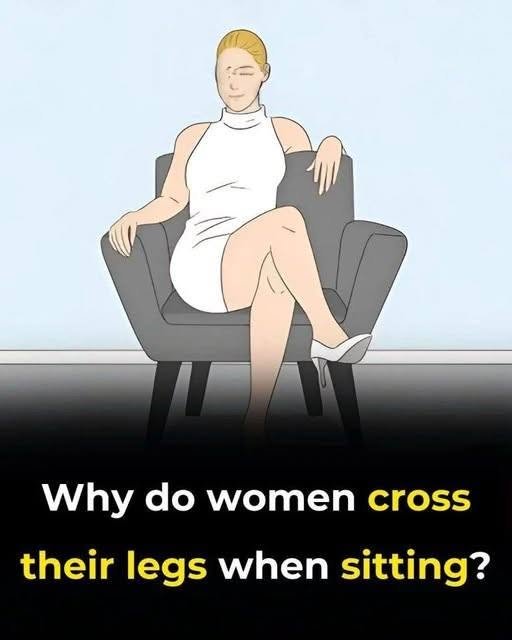
Women cross their legs while sitting for a variety of reasons. It is not something all women do, and there is no single explanation. The reasons involve comfort, social habits, body mechanics, clothing, and personal preference.
1. Comfort
The most common reason is simply comfort.
- Some people find crossing their legs reduces muscle tension.
- It can provide a stable sitting position.
- It may feel more natural than keeping both feet flat on the floor.
Many men also cross their legs, although they may do it differently because of differences in body shape and comfort.
2. Anatomy and Body Structure
Women’s bodies differ from men’s in several ways that can influence sitting posture.
- Wider pelvis: Women generally have a wider pelvis, which changes the angle of the thighs.
- Hip structure: The hip joints often allow greater flexibility and internal rotation.
- Center of gravity: Small differences in body proportions can make certain seated positions feel more balanced.
These differences don’t mean all women prefer crossed legs, but they can make the posture more comfortable for some.
3. Modesty
For women wearing skirts or dresses, crossing the legs can help:
- Keep the knees together.
- Reduce accidental exposure.
- Feel more secure in public.
This is one of the most common practical reasons.
4. Social and Cultural Norms
From a young age, many girls are taught to:
- Sit with knees together.
- Avoid spreading their legs widely.
- Maintain what their culture considers a “polite” posture.
These expectations vary greatly between cultures but can influence sitting habits well into adulthood.
5. Habit
Many people simply develop the habit over years.
Once a posture feels familiar, the brain tends to choose it automatically without much thought.
6. Psychological Reasons
Body language experts suggest crossed legs can sometimes indicate:
- Relaxation
- Feeling comfortable
- Self-protection
- Shyness
- Formality
However, body language is highly context-dependent. Crossing the legs alone does not reliably reveal a person’s emotions or intentions.
7. Clothing and Footwear
Certain clothing influences sitting posture.
For example:
- Tight skirts make leg crossing easier than sitting with legs apart.
- High heels change body alignment, making crossed legs feel more stable.
- Narrow chairs may also encourage crossing the legs.
8. Temperature
Crossing the legs can reduce exposed skin and help conserve a little body heat, especially in cooler environments.
9. Professional Appearance
In many workplaces or formal settings, crossing the legs (or crossing at the ankles) is often viewed as a neat, composed sitting posture.
Some people choose it to appear:
- Professional
- Confident
- Elegant
10. Personal Preference
Ultimately, everyone has individual preferences.
Some women:
- Never cross their legs.
- Prefer crossing at the ankles.
- Sit cross-legged on the chair.
- Sit with both feet flat on the floor.
Similarly, many men also cross their legs comfortably.
Are there health effects?
Crossing your legs occasionally is generally harmless. However, sitting in the same position for long periods—whether legs crossed or not—can lead to:
- Temporary numbness or tingling.
- Muscle stiffness.
- Reduced blood flow in the legs while in that position.
- Poor posture if maintained for extended periods.
Changing position regularly and standing up every 30–60 minutes is generally recommended for comfort and circulation.
Common Myths
Myth: Women cross their legs because they are flirting.
Fact: Most of the time, it’s simply a comfortable or habitual sitting position.
Myth: Crossing legs causes varicose veins.
Fact: Current evidence does not show that occasional leg crossing directly causes varicose veins, though prolonged sitting in general can contribute to circulation issues.
Myth: Only women cross their legs.
Fact: Men also frequently cross their legs, though the exact posture may differ based on comfort, clothing, and anatomy.
Summary
Women cross their legs while sitting for many reasons, including comfort, anatomy, modesty, social norms, clothing, habit, and personal preference. There is no universal reason, and the behavior varies widely among individuals and cultures.