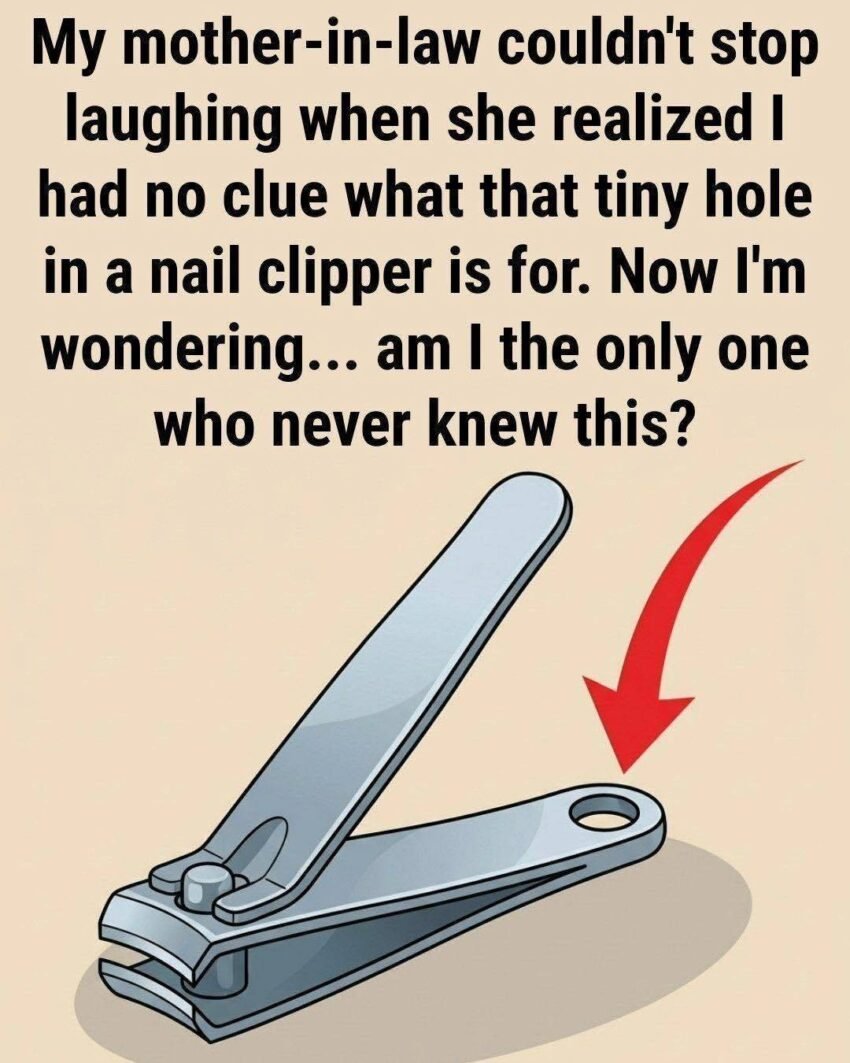
Here’s a detailed breakdown of why it exists and why it still matters today.
1. Originally for Manufacturing (the most important reason)
Most nail clippers are made from stamped steel. During manufacturing, metal parts are cut out using industrial punching machines.
That round hole is often:
- A tooling or alignment hole used during stamping
- A fixture point to hold the metal piece in place during shaping, grinding, or assembly
- A way to reduce material stress during cutting and bending
So in many cases, the hole is not just “for the user”—it starts as part of how the clipper is economically manufactured at scale.
2. A Keychain or Attachment Point
Many nail clippers include that hole so you can:
- Attach a key ring
- Hang it on a hook in a bathroom or travel kit
- Clip it to a pouch or grooming set
This is especially common in compact or travel nail clippers.
👉 This is why you often see nail clippers on keychains or multitools.
3. Mechanical Leverage and Folding Designs
In some designs, especially older or multi-tool clippers, the hole helps with:
- Pivoting or folding mechanisms
- Attaching a secondary lever arm (the part you press down)
- Stabilizing the clipper when force is applied
Nail clippers work through a lever system, and small structural features like this help distribute pressure efficiently.
4. Nail File or Cleaning Tool Attachment (in some models)
Some nail clippers come with a small:
- Nail file
- Cleaning pick
- Secondary blade
The hole may act as:
- A mounting point
- A pivot point for a fold-out accessory
This is more common in Swiss-army-style grooming tools.
5. Historical Carryover Design
Early 20th-century clippers borrowed design ideas from:
- Small metal folding tools
- Pocket knives
- Military grooming kits
The hole remained even when not strictly needed because:
- It didn’t increase cost
- It didn’t weaken the structure significantly
- It became a “standard feature” in production molds
So over time, it became part of the expected design language.
6. Modern-Day Practical Uses
Even today, that hole still matters because it allows:
- Easier portability (keychains, hooks, lanyards)
- Integration into multi-tools
- Factory efficiency (cheaper mass production)
- Structural consistency across designs
In modern minimalist tools, removing it would often require redesigning the stamping process, which could increase cost without meaningful benefit.
Why It’s Still There If It Seems Useless
The key reason is simple:
It costs almost nothing to include, but removing it may increase manufacturing complexity.
So manufacturers keep it because it’s:
- Cheap
- Useful in certain cases
- Already standardized globally
Quick Summary
That small round hole exists mainly because of:
- Manufacturing needs (primary reason)
- Portability and attachment
- Tool design flexibility
- Historical carryover from early metal tools
If you want, I can also explain how the lever mechanism inside a nail clipper multiplies force so easily cuts thick nails with little effort—that part is surprisingly clever.