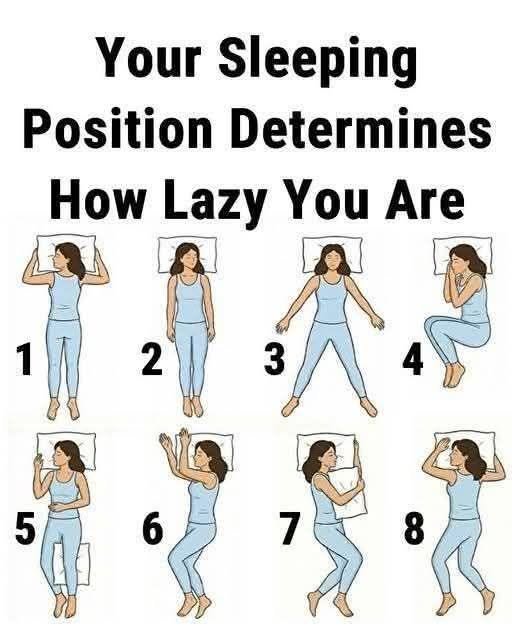
Here’s a detailed explanation:
Common Sleeping Positions and Popular Beliefs
1. Back Sleeper (Supine Position)
Description:
- Lying flat on your back with your arms at your sides or on your chest.
Common Myths:
- Calm and confident
- Organized
- Sometimes described as “lazy” because they move less during sleep
Scientific Reality:
- Sleeping still does not mean someone is lazy.
- Back sleeping can improve spinal alignment.
- It may increase snoring or worsen sleep apnea in some people.
2. Side Sleeper
Description:
- Sleeping on the left or right side.
Common Myths:
- Hardworking
- Friendly
- Responsible
Scientific Reality:
- Around 60% of adults prefer this position.
- Often recommended during pregnancy.
- Can reduce snoring and acid reflux (especially on the left side).
- No connection to laziness.
3. Fetal Position
Description:
- Curled up with knees drawn toward the chest.
Common Myths:
- Sensitive
- Shy
- Emotionally protective
Scientific Reality:
- One of the most common sleep positions.
- Can feel comforting.
- Curling too tightly may cause stiffness.
- Not linked to motivation or work ethic.
4. Stomach Sleeper (Prone Position)
Description:
- Lying face down.
Common Myths:
- Energetic
- Adventurous
- Restless
Scientific Reality:
- May reduce snoring.
- Often causes neck and lower back strain.
- No evidence it reflects personality or laziness.
5. Starfish Position
Description:
- Sleeping on the back with arms and legs spread.
Common Myths:
- Relaxed
- Helpful
- Easygoing
Scientific Reality:
- May increase snoring.
- Doesn’t indicate laziness or productivity.
What Actually Causes Laziness or Low Motivation?
Feeling “lazy” is often influenced by factors such as:
- Poor sleep quality
- Sleep deprivation
- Stress
- Depression or anxiety
- Burnout
- Poor nutrition
- Lack of exercise
- Certain medical conditions (such as thyroid disorders or anemia)
- Low motivation due to life circumstances
These factors have much stronger evidence behind them than sleep position.
What Science Says
Researchers who study sleep focus on:
- Sleep duration
- Sleep quality
- Sleep disorders
- Circadian rhythm
- REM and non-REM sleep
These factors affect:
- Energy
- Concentration
- Mood
- Productivity
- Memory
There is no accepted scientific research showing that sleeping position determines whether someone is lazy or hardworking.
How to Wake Up Feeling More Energetic
Instead of worrying about your sleep position, try to:
- Sleep 7–9 hours each night.
- Keep a consistent bedtime.
- Limit caffeine late in the day.
- Reduce screen time before bed.
- Exercise regularly.
- Eat a balanced diet.
- Get morning sunlight to help regulate your body clock.
Conclusion
Your sleeping position does not determine how lazy you are. While different positions can affect comfort, breathing, and spinal health, they are not reliable indicators of personality, motivation, or work ethic. If you’re often feeling low on energy or unmotivated, it’s more useful to look at your sleep quality, overall health, lifestyle, and stress levels rather than the way you sleep.