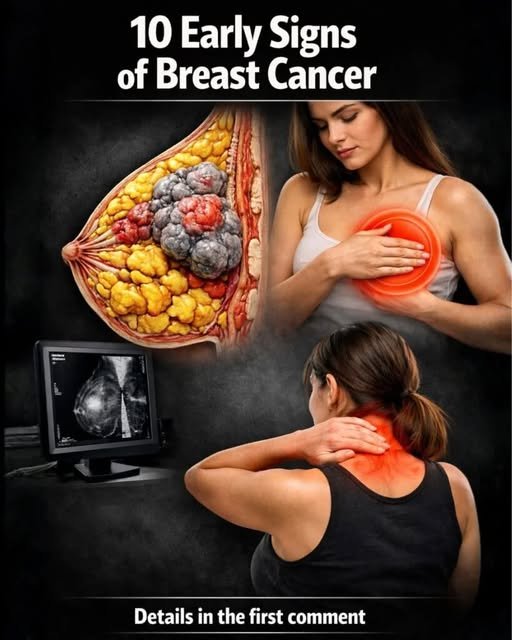
Breast cancer is one of the most common cancers worldwide. Detecting it early greatly improves the chances of successful treatment. While not every breast change is caused by cancer, certain symptoms should never be ignored. If you notice any of the following signs, schedule an appointment with a healthcare professional for evaluation.
1. A New Lump in the Breast or Underarm
A new lump is one of the most common early signs of breast cancer.
What to look for:
- A hard or firm lump
- Irregular edges
- Usually painless, though some lumps can be tender
- May appear in the breast or under the arm (armpit)
Important: Not all breast lumps are cancerous. Many are caused by cysts or other benign conditions, but every new lump should be checked by a healthcare provider.
2. Changes in Breast Size or Shape
A noticeable change in the size, shape, or appearance of one breast may indicate an underlying problem.
Possible changes include:
- One breast becoming larger or smaller
- Swelling in part of the breast
- Uneven appearance that wasn’t present before
These changes can occur even if no lump is felt.
3. Skin Dimpling or Puckering
Breast cancer can pull on the skin, causing it to look dimpled or puckered.
Signs include:
- Skin that resembles an orange peel (“peau d’orange”)
- Small dents or dimples
- Tightened or thickened skin
These changes may develop gradually and should be evaluated promptly.
4. Nipple Changes
Changes in the nipple can sometimes be an early warning sign.
Watch for:
- Nipple turning inward (new inversion)
- Flattening of the nipple
- Changes in the nipple’s position
- Persistent irritation
A nipple that has always been inverted is usually not concerning, but a newly inverted nipple should be assessed.
5. Unusual Nipple Discharge
Discharge from the nipple that occurs without squeezing should not be ignored.
Concerning discharge may be:
- Bloody
- Clear or watery
- Occurring from one breast only
- Persistent
Although infections and benign conditions can also cause discharge, medical evaluation is important.
6. Persistent Breast or Nipple Pain
Breast pain is common and is often related to hormonal changes. However, persistent pain in one specific area deserves attention.
Seek medical advice if:
- Pain lasts for several weeks
- Pain occurs in one spot
- Pain is not related to your menstrual cycle
- Pain is accompanied by other breast changes
Pain alone is not a common symptom of early breast cancer, but it should not be dismissed if it persists.
7. Redness or Thickening of the Skin
Inflammation or thickening of the breast skin can sometimes signal an aggressive form of breast cancer.
Symptoms include:
- Redness
- Warmth
- Swelling
- Thickened skin
- Rash that does not improve
If these symptoms persist despite treatment for an infection, further evaluation is necessary.
8. Swollen Lymph Nodes
Breast cancer may spread first to nearby lymph nodes before a breast lump becomes noticeable.
Possible signs:
- Swelling in the armpit
- Swelling above the collarbone
- Firm, enlarged lymph nodes
These changes can occur before other breast symptoms appear.
9. Persistent Itching or Rash Around the Nipple
A rash or itching that does not improve with routine skin care may require medical assessment.
Warning signs include:
- Crusting
- Scaling
- Flaking skin
- Persistent itching
- Burning sensation
These symptoms can sometimes be associated with uncommon forms of breast cancer, although eczema and other skin conditions are more common causes.
10. Breast Skin That Looks Different
Any unusual change in the breast’s appearance should be taken seriously.
Examples include:
- Thickened skin
- Changes in skin color
- Visible veins becoming more prominent
- Unexplained swelling
- Persistent bruising without injury
If these changes continue or worsen, consult a healthcare provider.
Risk Factors for Breast Cancer
Certain factors increase the risk of developing breast cancer, including:
- Increasing age
- Family history of breast or ovarian cancer
- Certain inherited gene variants (such as BRCA1 or BRCA2)
- Personal history of breast cancer
- Obesity after menopause
- Alcohol consumption
- Physical inactivity
- Long-term hormone replacement therapy
- Early menstruation or late menopause
Having one or more risk factors does not mean someone will definitely develop breast cancer, and many people diagnosed with breast cancer have no known risk factors.
How to Lower Your Risk
While breast cancer cannot always be prevented, healthy habits may help reduce risk:
- Maintain a healthy weight.
- Exercise regularly (aim for at least 150 minutes of moderate activity each week).
- Limit alcohol consumption.
- Avoid smoking.
- Eat a balanced diet rich in fruits, vegetables, whole grains, and lean protein.
- Follow recommended breast cancer screening guidelines for your age and risk level.
When to See a Doctor
Make an appointment with a healthcare professional if you notice:
- A new breast or underarm lump
- Persistent breast pain
- Nipple discharge (especially bloody or clear discharge from one breast)
- Changes in breast shape, size, or skin
- A new inverted nipple
- Swollen lymph nodes near the breast
Most breast changes are not caused by cancer, but prompt evaluation is important because early diagnosis offers the best chance for effective treatment.
Key Takeaway
The 10 early warning signs of breast cancer are:
- New breast or underarm lump
- Changes in breast size or shape
- Skin dimpling or puckering
- New nipple changes or inversion
- Unusual nipple discharge
- Persistent breast or nipple pain
- Redness or thickening of the breast skin
- Swollen lymph nodes
- Persistent nipple rash or itching
- Changes in the appearance or texture of the breast skin
Recognizing these symptoms early and seeking medical evaluation without delay can make a significant difference. Regular screening, awareness of normal breast changes, and timely medical care are key components of early detection.