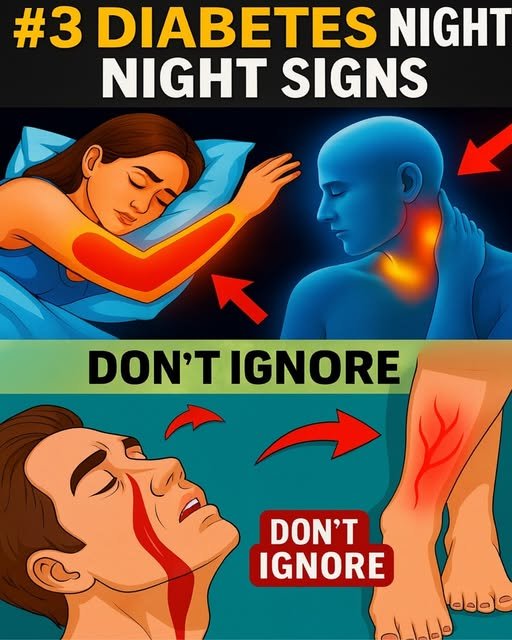
Diabetes can affect blood sugar levels throughout the day and night. Some people notice symptoms while they are sleeping or when they wake up. These symptoms do not confirm diabetes by themselves, but they can be a reason to check your blood sugar and consult a healthcare professional.
7 Nighttime Signs of Diabetes
1. Frequent Urination During the Night (Nocturia)
High blood sugar causes the kidneys to work harder to remove excess glucose through urine.
Symptoms:
- Waking up two or more times to urinate
- Large amounts of urine
- Difficulty getting uninterrupted sleep
Why it happens:
When blood sugar is high, glucose spills into the urine, pulling extra water with it.
2. Excessive Thirst
Frequent urination can lead to dehydration, making you feel very thirsty—even during the night.
Symptoms:
- Dry mouth
- Waking up needing water
- Feeling dehydrated in the morning
3. Night Sweats
Blood sugar that drops too low during sleep (especially in people taking insulin or certain diabetes medications) can trigger sweating.
Symptoms:
- Waking up with soaked pajamas or sheets
- Chills after sweating
- Restless sleep
Note: Night sweats can also have many other causes, including infections, hormonal changes, or certain medications.
4. Restless Sleep or Insomnia
Fluctuating blood sugar levels may interfere with normal sleep.
Possible reasons:
- Frequent bathroom trips
- Thirst
- Hunger
- Nerve pain
- Low blood sugar episodes
Poor sleep can also make blood sugar management more difficult.
5. Tingling or Burning Feet
Over time, high blood sugar can damage nerves (diabetic neuropathy).
Symptoms:
- Tingling
- Burning sensation
- Numbness
- Sharp pain in the feet, especially at night
This symptom usually develops after diabetes has been present for some time rather than being an early sign.
6. Increased Hunger at Night
When glucose cannot effectively enter the body’s cells, the body may signal hunger even if you’ve eaten.
Symptoms:
- Craving snacks before bed
- Feeling hungry after meals
- Morning hunger despite eating dinner
7. Morning Headaches or Fatigue
Poor overnight blood sugar control can leave you feeling unwell after waking.
Symptoms:
- Headache
- Tiredness
- Difficulty concentrating
- Feeling unrefreshed after sleep
8 Tips to Avoid Blood Sugar Spikes Without Cutting Carbs
You don’t necessarily have to eliminate carbohydrates. Instead, focus on choosing and eating them wisely.
1. Choose High-Fiber Carbohydrates
Fiber slows digestion and reduces rapid rises in blood sugar.
Examples:
- Oats
- Brown rice
- Quinoa
- Whole wheat bread
- Lentils
- Beans
- Vegetables
- Berries
Aim for about 25–38 grams of fiber daily, depending on age and sex.
2. Pair Carbs with Protein
Protein slows digestion and helps reduce blood sugar spikes.
Examples:
- Rice + chicken
- Apple + peanut butter
- Whole-grain toast + eggs
- Yogurt + berries
3. Include Healthy Fats
Healthy fats also slow stomach emptying.
Examples:
- Avocados
- Nuts
- Seeds
- Olive oil
- Fatty fish
Avoid excessive amounts, as fats are calorie-dense.
4. Watch Portion Sizes
Even healthy carbohydrates can raise blood sugar if eaten in large quantities.
Helpful strategies:
- Use a smaller plate.
- Fill half your plate with non-starchy vegetables.
- Measure servings when learning portion control.
5. Eat Carbs After Vegetables and Protein
Research suggests meal order can influence blood sugar.
A simple sequence is:
- Vegetables
- Protein
- Carbohydrates
This may reduce the size of the blood sugar rise after eating.
6. Stay Physically Active
Even a short walk after meals can help muscles use glucose more effectively.
Good options:
- 10–20 minute walk
- Light cycling
- Household chores
- Gentle stretching
7. Avoid Sugary Drinks
Liquid sugar enters the bloodstream very quickly.
Instead choose:
- Water
- Sparkling water
- Unsweetened tea
- Black coffee (if appropriate for you)
8. Eat at Regular Times
Skipping meals or eating very large meals can make blood sugar harder to manage.
Try to:
- Eat meals consistently.
- Avoid late-night overeating.
- Include balanced meals with protein, fiber, and healthy fats.
When to See a Doctor
Consider speaking with a healthcare professional if you have:
- Frequent nighttime urination
- Excessive thirst
- Unexplained weight loss
- Blurred vision
- Persistent fatigue
- Slow-healing wounds
- Numbness or tingling in the hands or feet
They may recommend tests such as:
- Fasting blood glucose
- HbA1c (A1C)
- Oral glucose tolerance test, if appropriate
Early diagnosis and treatment can help reduce the risk of complications.
Key Takeaway
Nighttime symptoms such as frequent urination, thirst, disrupted sleep, night sweats, tingling feet, increased hunger, and morning fatigue can sometimes be associated with diabetes or blood sugar fluctuations, but they are not specific to diabetes and can have other causes. If you notice these symptoms consistently, it’s important to discuss them with a healthcare professional rather than relying on symptoms alone. Managing blood sugar does not always require eliminating carbohydrates—choosing high-fiber carbs, pairing them with protein and healthy fats, controlling portions, staying active, and maintaining regular eating habits can help reduce blood sugar spikes while still including carbohydrates in your diet.