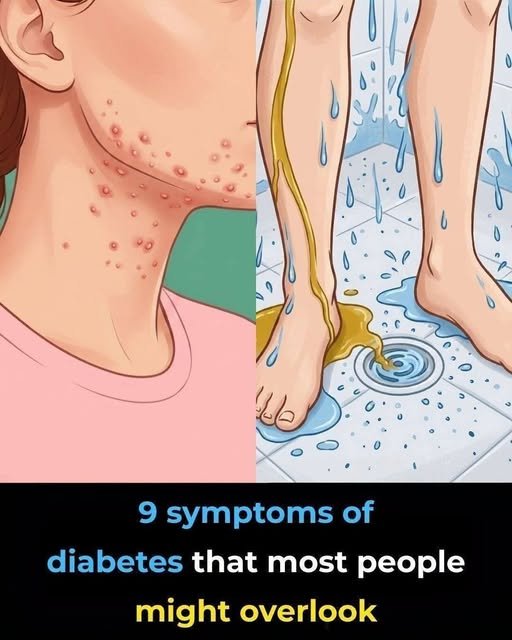
Here are 9 commonly overlooked symptoms of diabetes in detail:
1. Frequent Urination (Polyuria)
One of the earliest signs of diabetes is needing to urinate more often than usual, especially during the night.
Why it happens:
- When blood sugar levels become too high, the kidneys try to remove the excess glucose through urine.
- This pulls extra water from the body, increasing urine production.
Signs to watch for:
- Waking several times at night to use the bathroom.
- Producing larger amounts of urine than usual.
- Feeling like you need to urinate shortly after drinking fluids.
2. Excessive Thirst (Polydipsia)
Feeling unusually thirsty even after drinking enough water can be another early symptom.
Why it happens:
- Frequent urination causes dehydration.
- Your brain responds by increasing your thirst.
Overlooked because:
- People often blame hot weather, exercise, or salty foods.
3. Constant Hunger (Polyphagia)
Many people with diabetes feel hungry shortly after eating.
Why it happens:
- Although glucose is present in the bloodstream, insulin isn’t working effectively or isn’t available in sufficient amounts.
- Your body’s cells can’t use the glucose efficiently for energy, so they signal that they need more fuel.
Possible signs:
- Eating larger meals than usual.
- Feeling hungry within an hour or two after eating.
- Craving sugary or high-carbohydrate foods.
4. Unexplained Weight Loss
Losing weight without changing your diet or exercise routine can be a warning sign, especially in type 1 diabetes, though it can also occur in type 2 diabetes.
Why it happens:
- Since the body can’t use glucose effectively, it starts breaking down fat and muscle for energy.
Warning signs:
- Clothes becoming looser.
- Noticeable weight loss over weeks or months.
- Feeling weaker than usual.
5. Persistent Fatigue
Feeling tired all the time despite getting enough sleep is common in diabetes.
Why it happens:
- Your cells aren’t getting enough usable glucose for energy.
- Dehydration and inflammation can also contribute to fatigue.
People often mistake it for:
- Stress.
- Lack of sleep.
- Busy schedules.
6. Blurred Vision
High blood sugar can temporarily affect your eyesight.
Why it happens:
- Excess glucose causes fluid shifts in the lens of the eye, affecting its ability to focus.
Symptoms:
- Difficulty reading.
- Trouble focusing on distant objects.
- Vision that comes and goes.
Important: Persistent high blood sugar can increase the risk of diabetic eye disease, so any ongoing vision changes should be evaluated promptly.
7. Slow-Healing Cuts and Frequent Infections
Small wounds that take a long time to heal may indicate diabetes.
Why it happens:
- High blood sugar can damage blood vessels and impair immune function.
- Reduced circulation limits oxygen and nutrients needed for healing.
Common infections include:
- Skin infections.
- Gum infections.
- Urinary tract infections.
- Yeast infections.
8. Tingling or Numbness in Hands and Feet
This can be an early sign of nerve damage related to diabetes.
Why it happens:
- Chronically high blood sugar can damage nerves over time.
Symptoms:
- Pins-and-needles sensation.
- Burning pain.
- Numbness.
- Reduced sensation in the feet or hands.
Ignoring these symptoms can increase the risk of foot injuries and other complications.
9. Dark Patches of Skin (Acanthosis Nigricans)
Dark, velvety areas of skin—especially around the neck, armpits, or groin—can be associated with insulin resistance.
Why it happens:
- High insulin levels may stimulate skin cells to grow more rapidly.
Appearance:
- Brown or black discoloration.
- Thickened, velvety texture.
- Most commonly found on the back of the neck or under the arms.
This symptom is particularly associated with insulin resistance and type 2 diabetes.
Other Symptoms That Can Occur
Some people may also experience:
- Dry mouth.
- Itchy skin.
- Increased susceptibility to infections.
- Mood changes or irritability.
- Fruity-smelling breath (more common in type 1 diabetes and can indicate a medical emergency called diabetic ketoacidosis).
- Nausea or vomiting (especially with diabetic ketoacidosis).
Who Is at Higher Risk?
Risk factors include:
- Being overweight or having obesity.
- A family history of diabetes.
- Being physically inactive.
- High blood pressure.
- High cholesterol.
- A history of gestational diabetes.
- Increasing age (though diabetes can occur at any age).
When to See a Healthcare Professional
If you have one or more of these symptoms, especially frequent urination, excessive thirst, unexplained weight loss, or blurred vision, it’s important to arrange a medical evaluation. A healthcare professional may recommend blood tests such as:
- Fasting blood glucose.
- Hemoglobin A1c (HbA1c).
- Oral glucose tolerance test (in some situations).
Early diagnosis and treatment can help prevent complications affecting the eyes, kidneys, nerves, heart, and blood vessels.
Seek urgent medical care immediately if you have symptoms such as severe vomiting, confusion, difficulty breathing, extreme drowsiness, or fruity-smelling breath along with high blood sugar, as these can be signs of a serious diabetes-related emergency.