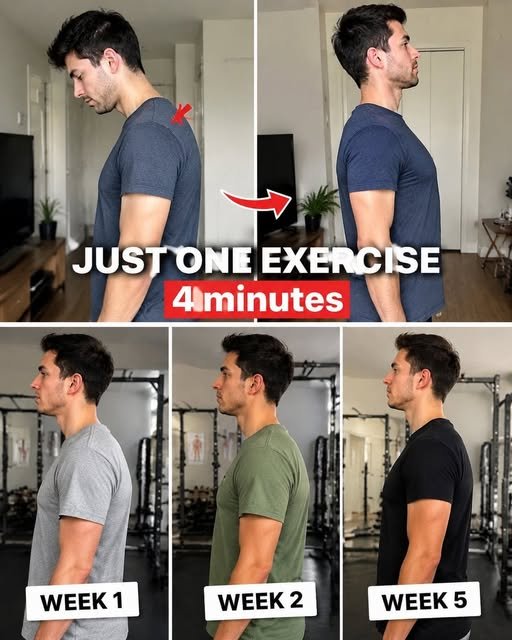
The phrase “Japan’s Oldest Doctor: Simple Ways to Support Better Posture and Neck Alignment After 60 in Just 4 Minutes a Day” is often used in health articles and videos as a title for a gentle posture routine. It usually refers to simple mobility and strengthening habits inspired by Japanese longevity practices. However, there is no strong scientific evidence that one specific “oldest Japanese doctor’s 4-minute routine” is a proven treatment. The ideas below are general posture-support exercises that many older adults can safely adapt.
Why posture and neck alignment often change after 60
As we age, several changes can affect posture:
Reduced muscle strength, especially in the upper back, neck, and core
Stiffer joints in the spine and shoulders
Forward head posture (head drifting forward compared with the shoulders)
Less flexibility in the chest and hip muscles
More time spent sitting, using phones, or watching screens
A forward head position increases the workload on neck muscles. Even a small forward shift can make the neck muscles work harder to support the head.
Benefits of improving posture may include:
Easier breathing
Better balance and walking confidence
Reduced neck and shoulder tension
Improved ability to perform daily activities
Greater awareness of body position
The 4-Minute Daily Posture Routine
Minute 1: Chin Tuck (Neck Alignment Exercise)
Purpose: Helps train the deep neck muscles that support a neutral head position.
How to do it:
Sit or stand tall.
Keep your eyes looking straight ahead.
Slowly pull your chin backward, as if making a “double chin.”
Do not tilt your head downward.
Hold for 3–5 seconds.
Relax.
Repetitions:
10 times
You should feel:
Gentle tightening at the front of the neck
Stretching at the back of the neck
Avoid:
Forcefully pushing the head backward
Looking down
Minute 2: Shoulder Blade Squeeze
Purpose: Strengthens upper-back muscles that help prevent rounded shoulders.
How to do it:
Sit or stand upright.
Let your arms relax by your sides.
Pull your shoulder blades gently back and down.
Imagine holding a small object between your shoulder blades.
Hold for 5 seconds.
Release.
Repetitions:
10 times
Benefits:
Opens the chest
Improves upper-back posture
Reduces shoulder rounding
Minute 3: Chest Opening Stretch
Purpose: Counteracts the tight chest muscles caused by sitting and forward posture.
How to do it:
Stand near a doorway.
Place your forearms against the door frame.
Step forward slowly.
Feel a gentle stretch across your chest.
Hold.
Time:
20–30 seconds
Repeat twice
Important:
The stretch should feel mild, not painful.
Minute 4: Wall Posture Reset
Purpose: Teaches the body what good alignment feels like.
How to do it:
Stand with your back against a wall.
Keep:
Heels near the wall
Upper back touching the wall
Back of head gently touching if comfortable
Relax your shoulders.
Take slow breaths.
Time:
60 seconds
Focus:
Imagine your spine becoming long and upright.
Additional Japanese-style daily habits for better posture
1. Practice “walking tall”
While walking:
Keep your eyes level
Relax your shoulders
Keep your chest gently open
Avoid looking down constantly
2. Reduce “phone neck”
When using a phone:
Instead of:
❌ Head bent down for long periods
Try:
✅ Raise the phone closer to eye level
✅ Take movement breaks every 20–30 minutes
3. Strengthen the legs and hips
Good posture depends on the whole body.
Helpful movements:
Slow squats using a chair
Standing leg raises
Walking regularly
Balance exercises
Strong legs help maintain a stable upright posture.
A simple 7-day habit plan
Day Focus
1 Learn chin tucks
2 Add shoulder blade squeezes
3 Add chest stretching
4 Practice wall alignment
5 Combine all exercises
6 Add a short walk
7 Repeat and improve comfort
Safety advice for adults over 60
Stop and seek medical advice if exercises cause:
Sharp neck pain
Arm numbness or tingling
Dizziness
Severe headaches
Loss of balance
People with osteoporosis, recent neck injuries, or spinal conditions should ask a healthcare professional before starting new exercises.
A consistent 4 minutes every day can help build posture awareness. The biggest improvement usually comes from repeating gentle movements regularly rather than doing intense exercises occasionally.