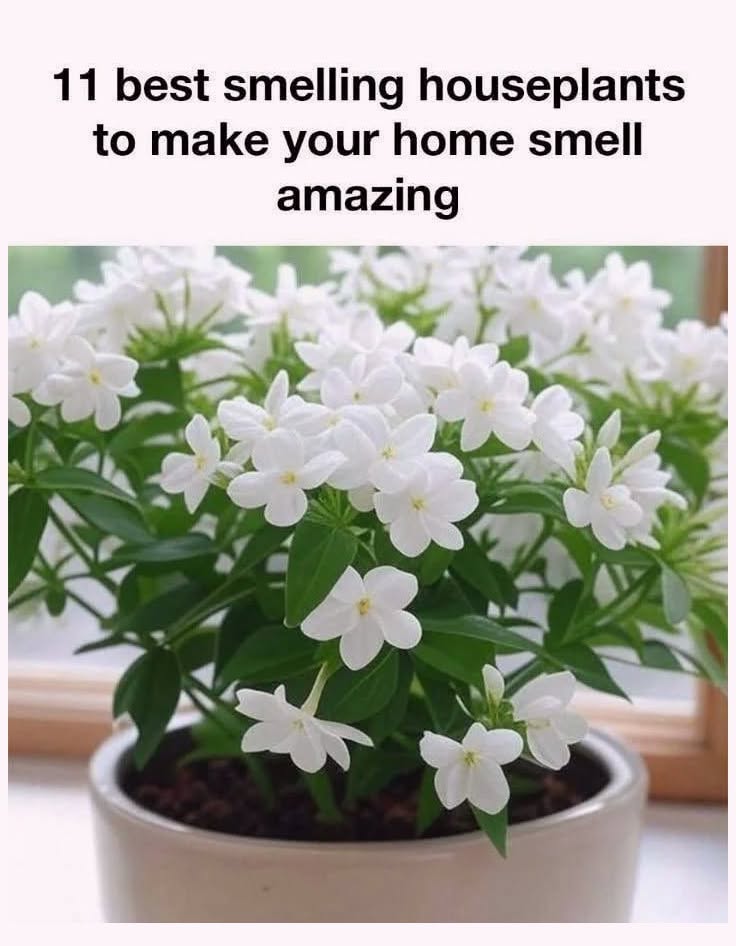
Absolutely. Some houseplants can make a room smell noticeably fresher or more fragrant, although the strength varies with light, temperature, watering, and whether the plant is flowering or its leaves are disturbed.
🌿 Houseplants with naturally pleasant scents
1. Arabian Jasmine (Jasminum sambac)
One of the strongest choices for a naturally fragrant room.
-
Scent: Sweet, rich, floral, slightly honey-like.
-
When it smells: Mainly when it flowers; some varieties can produce heavily scented blooms.
-
Light: Bright light, ideally several hours of direct sun.
-
Water: Keep the soil moderately moist but don’t leave it waterlogged.
-
Best location: A sunny windowsill, balcony door, or bright indoor area.
-
Extra benefit: A small plant can perfume a surprisingly large space when flowering.
-
Potential issue: Without sufficient sunlight, it may grow leaves but produce few flowers.
Best for: People who want a pronounced floral fragrance.
2. Gardenia (Gardenia jasminoides)
Gardenia is famous for its powerful, luxurious fragrance.
-
Scent: Creamy, sweet, intensely floral, sometimes described as similar to jasmine.
-
Flowers: White, waxy blooms with a very strong aroma.
-
Light: Very bright indirect light to some direct morning sun.
-
Humidity: High humidity is particularly helpful.
-
Temperature: Prefers relatively stable temperatures and dislikes sudden changes.
-
Water: Consistent moisture is important, but drainage must be excellent.
-
Difficulty: Considerably more demanding than many ordinary houseplants.
Best for: Someone who wants a dramatic perfume-like fragrance and is willing to provide careful care.
3. Lavender (Lavandula)
Lavender is better known for its fragrant foliage than for filling an entire room with flowers.
-
Scent: Clean, herbal, slightly sweet and relaxing.
-
When it smells: The leaves release aroma when touched, while flowers provide additional fragrance.
-
Light: Very bright light and plenty of direct sun.
-
Water: Allow the soil to dry substantially between waterings.
-
Soil: Fast-draining soil is essential.
-
Humidity: Generally prefers relatively dry conditions.
-
Best location: A very sunny windowsill.
Important: Lavender often struggles in dim indoor rooms. A sunny window is much more important than frequent watering.
4. Rosemary (Salvia rosmarinus)
An excellent choice if you prefer a fresh, herbal smell rather than a floral perfume.
-
Scent: Pine-like, woody, herbal and slightly peppery.
-
When it smells: The foliage is aromatic, particularly when brushed or rubbed.
-
Light: Strong direct sunlight.
-
Water: Let the upper portion of the soil dry before watering again.
-
Humidity: Doesn’t require tropical humidity.
-
Uses: You can also harvest the leaves for cooking.
-
Best location: Sunny kitchen windowsill.
Best for: Kitchens and people who want an aromatic herb rather than a flowering plant.
5. Mint (Mentha)
Mint is one of the easiest ways to get a recognizable fresh scent indoors.
-
Scent: Cool, fresh, minty and distinctly green.
-
When it smells: The leaves release much more fragrance when touched or crushed.
-
Light: Bright light; some morning or afternoon sun is useful.
-
Water: Likes consistently somewhat moist soil.
-
Growth: Extremely vigorous.
-
Best location: Kitchen windowsill or another bright location.
Tip: Don’t plant mint in a tiny container if you want it to remain for years. It spreads aggressively, so keeping it in its own pot is usually best.
6. Lemon balm (Melissa officinalis)
A close relative of mint with a softer citrus fragrance.
-
Scent: Fresh lemon/citrus with a gentle herbal note.
-
When it smells: Especially when leaves are touched.
-
Light: Bright light to some direct sun.
-
Water: Keep reasonably moist, but avoid stagnant water.
-
Growth: Fast-growing and easy to propagate.
-
Best location: Kitchen, sunny windowsill, or bright indoor garden.
It’s particularly nice if you want a fresh citrus smell without the intensity of some floral plants.
7. Scented geraniums (Pelargonium species)
These are fascinating because different varieties have very different fragrances.
-
Scent: Depending on the cultivar, you can get rose, lemon, mint, apple, coconut or other aromas.
-
When it smells: Primarily when the leaves are touched.
-
Light: Bright light and some direct sun.
-
Water: Let the soil dry somewhat between waterings.
-
Flowers: Attractive but generally less important for fragrance than the leaves.
-
Maintenance: Relatively straightforward compared with gardenia.
Best for: Anyone who wants to experiment with different plant fragrances.
8. Eucalyptus
Eucalyptus isn’t normally grown indoors as a long-term houseplant as easily as pothos or snake plants, but a young eucalyptus in a very bright room can provide a distinctive aroma.
-
Scent: Cool, camphor-like, minty and woody.
-
When it smells: The foliage is naturally aromatic.
-
Light: Very bright light.
-
Water: Moderate watering with good drainage.
-
Growth: Many species eventually become large.
-
Best use indoors: As a temporary/young plant or where you have enough space and light.
9. Citrus trees — especially lemon or calamondin
Small citrus trees can provide two different sources of fragrance.
-
Flowers: White citrus blossoms can be remarkably sweet and fragrant.
-
Leaves: Give off a pleasant citrus scent when rubbed.
-
Fruit: Adds visual appeal and can eventually provide edible fruit.
-
Light: Strong sunlight is essential.
-
Water: Water thoroughly but allow appropriate drying between waterings.
-
Space: They need considerably more light and room than typical houseplants.
Best for: A bright, sunny room or enclosed balcony.
10. Hoya (Hoya species)
Hoya is especially interesting because some species produce intensely fragrant flowers.
-
Scent: Sweet, floral, sometimes honey-like or waxy.
-
Flowers: Star-shaped clusters called umbels.
-
When it smells: Mainly while flowering, often becoming more noticeable later in the day or at night depending on the species.
-
Light: Bright indirect light; some gentle direct sun can be beneficial.
-
Water: Allow the potting mix to dry somewhat between waterings.
-
Growth: Slow to moderate, depending on species.
Best for: Someone who wants a beautiful trailing plant with occasional bursts of fragrance.
🌸 Which plants make the whole room smell?
There’s an important distinction between fragrant foliage and fragrant flowers.
| Plant | Main fragrance source | Fragrance strength | Indoor difficulty |
|---|---|---|---|
| Arabian jasmine | Flowers | 🌸🌸🌸🌸🌸 | Moderate |
| Gardenia | Flowers | 🌸🌸🌸🌸🌸 | High |
| Hoya | Flowers | 🌸🌸🌸🌸 | Easy–moderate |
| Lavender | Leaves + flowers | 🌿🌿🌿 | Moderate |
| Rosemary | Leaves | 🌿🌿🌿 | Easy–moderate |
| Mint | Leaves | 🌿🌿🌿 | Easy |
| Lemon balm | Leaves | 🍋🍋🍋 | Easy |
| Scented geranium | Leaves | 🌿🌿🌿 | Easy–moderate |
| Citrus | Flowers + leaves | 🍋🍋🍋🍋 | Moderate–high |
🌺 For the strongest floral fragrance
I’d look at Arabian jasmine, gardenia, and fragrant hoya.
🌿 For an easy everyday fresh scent
Mint, lemon balm, rosemary, and scented geranium are more practical because you don’t have to wait for flowering.
☀️ The biggest secret: light
A fragrant plant won’t necessarily make a room smell good simply because it’s sitting there. Flowering is usually what determines whether the fragrance becomes powerful enough to fill a room. Consequently, a plant receiving inadequate light may remain alive but produce little or no fragrance.
Also, don’t rely on houseplants to remove strong odors such as smoke, mold, or cooking smells. Fragrant plants can add a pleasant natural aroma, but ventilation and odor control are much more effective for actually removing unwanted smells.
If you tell me whether your room is sunny, bright-but-no-direct-sun, or fairly dark, I can narrow this down to the best 5 fragrant plants for your conditions.