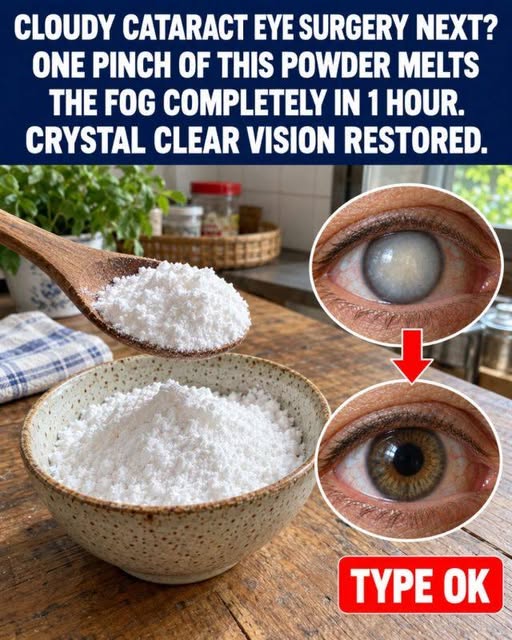
The common white powder associated with cataracts: N-acetylcarnosine and its role in eye-lens health
The substance you may be referring to is N-acetyl-L-carnosine (NAC), a compound that has attracted attention for its potential role in protecting the eye’s natural lens against oxidative damage and cataract development.
It is important to distinguish this substance from ordinary household powders or supplements. N-acetylcarnosine is a specialized compound studied in ophthalmology, particularly in connection with cataracts.
Let’s explore what it is, how it works, what the research says, and whether it can actually help cloudy eyes.
1. What is N-acetylcarnosine?

N-acetyl-L-carnosine
-
A modified form of carnosine.
-
A dipeptide-related compound.
-
Studied for antioxidant properties.
-
Used in experimental and marketed ophthalmic formulations.
N-acetylcarnosine has been described as a white powder in pharmaceutical specifications.
Carnosine itself is naturally present in human tissues, including muscle and other organs. Researchers have investigated whether carnosine-related compounds can help protect proteins from oxidative stress.
The eye lens is particularly interesting because its transparency depends on maintaining the structure and organization of its proteins.
2. How does it supposedly support the cloudy eye lens?
The eye’s natural lens contains proteins called crystallins. These proteins must remain properly organized to allow light to pass through clearly.
With aging and other risk factors, several changes can occur:
-
Oxidative stress damages lens proteins.
-
Proteins can become chemically modified.
-
Some proteins lose their normal structure.
-
Protein clumping increases light scattering.
-
The lens gradually becomes cloudy.
This is how cataracts develop.

The proposed antioxidant mechanism
N-acetylcarnosine has been investigated because it may:
-
Act as a precursor to L-carnosine.
-
Help counter certain oxidative reactions.
-
Protect proteins from some forms of oxidative damage.
-
Potentially reduce oxidative stress in ocular tissues.
These are biologically interesting mechanisms, but they do not establish that the substance can remove an established cataract.
3. What does scientific research say?
There is some research on N-acetylcarnosine eye drops.
One published paper in Clinical Interventions in Aging in 2009 discussed N-acetylcarnosine formulations and their proposed effects on cataracts and glare sensitivity.
However, the more important evidence comes from a systematic review.
Cochrane systematic review (2017)
Insufficient clinical evidence
Researchers evaluated the available studies involving N-acetylcarnosine eye drops.
Their conclusion was that there was no convincing evidence that these drops reverse cataracts or prevent their progression.
Source: Cochrane Review – N-acetylcarnosine drops for age-related cataracts .
The American Academy of Ophthalmology also states that there are no established medications that eliminate existing cataracts or reliably slow their progression.
4. Can N-acetylcarnosine restore cloudy vision?
This is an important distinction:
|
Possible benefit |
Scientific position |
|---|---|
|
Antioxidant activity |
Biologically plausible |
|
Protection against oxidative damage |
Supported by laboratory research |
|
Improving lens transparency |
Not established in humans |
|
Reversing existing cataracts |
Not proven |
|
Replacing cataract surgery |
No |
Do not purchase a product simply because its advertisement promises to dissolve cataracts or restore natural vision.
Also, never put raw N-acetylcarnosine powder or homemade solutions into your eyes. Eye preparations must be appropriately formulated, sterile and suitable for ophthalmic use.
5. What actually helps maintain eye-lens health?


Some sensible measures for supporting general eye health include:
-
Vitamin C: Found in oranges, guava, berries and peppers.
-
Vitamin E: Found in almonds, sunflower seeds and vegetable oils.
-
Lutein and zeaxanthin: Found in spinach, kale and other leafy vegetables.
-
Healthy lifestyle: Avoid smoking and maintain good blood sugar control.
-
UV protection: Wear sunglasses that provide 99–100% UVA and UVB protection.
These measures support overall eye health, but none is a proven cure for cataracts.
6. What is the proven treatment for cataracts?

When a cataract significantly affects everyday vision, cataract surgery is the established treatment.
During the procedure:
-
The surgeon removes the cloudy natural lens.
-
The cloudy lens material is replaced with a clear artificial intraocular lens.
-
Light can then pass through the new lens to the retina.
Cataract surgery is generally highly successful. Surgery is recommended according to how much the cataract affects your daily activities, not simply because a cataract has been diagnosed.
7. One important question
The headline you shared may refer to a particular white powder or a product advertisement. N-acetylcarnosine is one possible match, but I cannot confirm that it is the exact substance intended.
Are you interested in:
-
N-acetylcarnosine and its potential benefits for cataracts?
-
Vitamin C powder and its role in protecting the eye lens?
-
L-carnosine supplements and cataract prevention?
-
A natural approach to maintaining clear vision as you age?
If you share the original article or product name, I can identify the exact white powder and explain its ingredients, scientific evidence, benefits, limitations and safety.