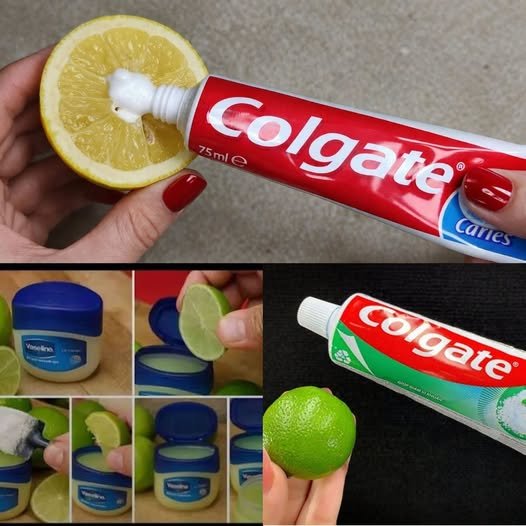
Here’s why this mixture is often promoted:
- Lemon contains citric acid, which can dissolve some stains, remove odors, and has mild antibacterial properties.
- Toothpaste contains mild abrasives, detergents, and sometimes whitening agents that help clean teeth or polish certain surfaces.
Together, they may work as a cleaning paste for some household items (such as tarnished metal or stained surfaces), but they are not a universal remedy.
If the claim is about skin or beauty
Many social media posts recommend lemon and toothpaste for acne, dark spots, or skin whitening. This is not recommended because:
- Lemon juice can irritate the skin and increase sensitivity to sunlight, potentially causing burns or discoloration.
- Toothpaste contains ingredients (such as detergents, flavorings, and whitening compounds) that can dry out or irritate the skin.
- The combination may lead to redness, peeling, or allergic reactions.
If the claim is about cleaning
A lemon with toothpaste can sometimes help:
- Remove mild stains from certain hard surfaces.
- Reduce odors.
- Polish some metals (test on a small area first).
If the claim is about teeth
Do not rub lemon and toothpaste directly on your teeth. Lemon’s acid can erode tooth enamel, and frequent use may increase tooth sensitivity and the risk of cavities.
Bottom line
The phrase “you’ll never have this problem again” is an exaggerated marketing claim. Whether the mixture works depends entirely on the specific problem, and for many health or beauty uses, it can do more harm than good.
If you tell me what problem the video claims to solve (for example: cockroaches, blackheads, yellow teeth, rust, bad smell, ants, etc.), I can explain in detail whether the remedy is effective and suggest safer or more reliable alternatives.