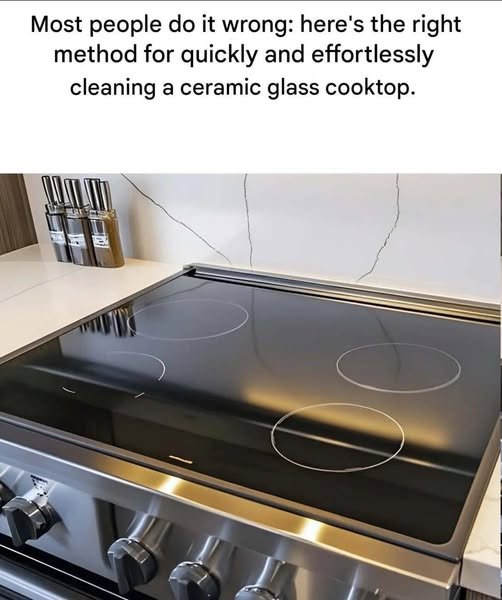
Cleaning a ceramic glass cooktop (glass-ceramic stove surface) requires a gentle approach because the surface is smooth but can be scratched by abrasive cleaners, rough sponges, or trapped food particles. Here is a detailed guide for effective cleaning without damage.
What you need
- Soft microfiber cloths
- Non-abrasive sponge or soft cleaning pad
- Ceramic glass cooktop cleaner (recommended)
- White vinegar (optional)
- Baking soda (for stubborn stains, used carefully)
- Plastic cooktop scraper/razor scraper designed for glass cooktops
- Warm water
- Paper towels (optional)
Avoid:
- Steel wool
- Metal scrubbers
- Abrasive powders
- Scouring pads
- Knife blades or unapproved scrapers
- Harsh oven cleaners or bleach-based products
Step-by-step cleaning method
1. Allow the cooktop to cool completely
Before cleaning:
- Turn off all burners.
- Wait until the surface is completely cool.
- Do not pour cold water onto a hot cooktop because sudden temperature changes can damage the glass.
A cool surface also prevents cleaners from drying too quickly and leaving streaks.
2. Remove loose dirt and crumbs
Before applying cleaner:
- Use a dry microfiber cloth or paper towel.
- Wipe away loose food particles, dust, and crumbs.
This step is important because rubbing crumbs across the surface can create tiny scratches.
3. Clean everyday spills
For normal grease, fingerprints, and light stains:
- Mix warm water with a few drops of mild dish soap.
- Dip a microfiber cloth into the solution.
- Wipe the cooktop gently in circular motions.
- Rinse the cloth and wipe away soap residue.
- Dry with a clean microfiber towel to prevent streaks.
For daily maintenance, this is usually enough.
4. Use a ceramic cooktop cleaner for deeper cleaning
A dedicated ceramic glass cleaner helps remove grease and cooked-on residue.
Steps:
- Apply a small amount of ceramic cooktop cleaner to the cool surface.
- Spread it evenly with a soft cloth.
- Allow it to sit according to the product instructions (usually a few minutes).
- Buff gently with a microfiber cloth.
- Remove remaining residue with a clean damp cloth.
- Dry and polish the surface.
These cleaners often leave a protective layer that makes future cleaning easier.
5. Removing burnt-on food safely
For hardened spills:
Method A: Use a cooktop scraper
- Make sure the surface is cool.
- Hold the scraper at about a 30–45 degree angle.
- Gently push under the residue.
- Do not dig into the glass.
- Wipe away loosened material with a microfiber cloth.
Use only scrapers specifically made for ceramic glass cooktops.
Method B: Baking soda paste (for stubborn stains)
- Sprinkle a small amount of baking soda over the stain.
- Add a few drops of water to make a soft paste.
- Let it sit for 10–15 minutes.
- Wipe gently with a soft cloth.
- Rinse thoroughly.
Do not scrub aggressively because baking soda can become abrasive if rubbed hard.
6. Removing white mineral marks or haze
White cloudy marks are often caused by mineral deposits from water or food residue.
Try:
- Apply white vinegar to a microfiber cloth.
- Wipe the affected area.
- Let it sit briefly (1–2 minutes).
- Rinse with clean water.
- Dry completely.
Do not leave vinegar sitting for long periods.
7. Cleaning sugar, melted plastic, or foil spills
These require quick action because they can bond strongly to the glass.
If the surface is still warm:
- Turn off the burner.
- Use a proper cooktop scraper carefully while the surface is warm (follow manufacturer guidance).
- Push the melted material away.
- Once cool, clean normally.
Do not try to scrape aggressively after it hardens.
8. Final polishing
For a streak-free finish:
- Spray a small amount of water or vinegar solution.
- Wipe with a clean microfiber cloth.
- Buff in circular motions.
- Finish with a dry microfiber cloth.
A completely dry surface looks clearer and helps prevent marks.
How often to clean
- After every use: Wipe spills and grease once the surface cools.
- Weekly: Use ceramic cooktop cleaner for a polished finish.
- Immediately: Remove sugar, syrup, melted plastic, or sticky spills.
Common mistakes that cause scratches
❌ Sliding heavy pots across the surface
❌ Cleaning with rough sponges
❌ Using abrasive powders
❌ Leaving grains of salt, sugar, or sand under cookware
❌ Scrubbing aggressively
❌ Using dirty cloths containing grit
❌ Dropping cookware onto the glass
Tips to keep the cooktop looking new
- Lift pots instead of dragging them.
- Keep the bottoms of pans clean and smooth.
- Use flat-bottom cookware.
- Wipe spills quickly.
- Store cleaning tools separately so they do not collect dirt.
- Avoid placing aluminum foil directly on the cooktop.
With regular gentle cleaning and proper tools, a ceramic glass cooktop can remain glossy and scratch-free for many years.