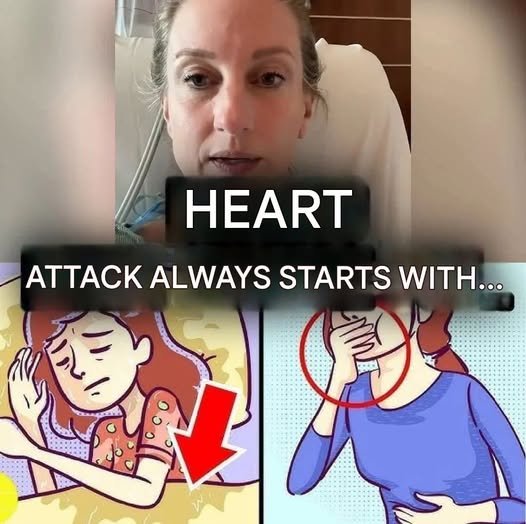
A heart attack does not always begin with sudden, severe chest pain. Many people experience warning signs hours, days, or even a week before the actual event. Recognizing these symptoms early can save a life.
Symptoms that may appear a week before a heart attack
1. Chest discomfort (most common warning sign)
- Pressure, tightness, squeezing, heaviness, or burning in the center or left side of the chest.
- It may come and go and last for several minutes.
- Some people mistake it for heartburn or indigestion.
2. Unusual fatigue
- Feeling extremely tired without a clear reason.
- Simple activities such as walking, climbing stairs, or doing household chores may become exhausting.
- This is reported particularly often by women.
3. Shortness of breath
- Difficulty breathing during activity or even while resting.
- It may occur with or without chest pain.
4. Pain spreading to other areas
Pain may radiate to:
- Left or right arm
- Shoulder
- Neck
- Jaw
- Upper back
- Occasionally the upper abdomen
5. Cold sweats
- Sudden sweating that is unrelated to exercise or heat.
- Often accompanied by clammy skin.
6. Nausea or indigestion
- Feeling sick to the stomach, vomiting, or persistent indigestion.
- These symptoms are more common in women and older adults.
7. Dizziness or lightheadedness
- Feeling faint, weak, or unsteady.
- Sometimes accompanied by palpitations.
Why these symptoms occur
A heart attack usually happens because one or more coronary arteries become severely narrowed or blocked, reducing blood flow to the heart muscle. As the heart receives less oxygen, the body may produce warning symptoms before the artery becomes completely blocked.
Risk factors
- High blood pressure
- High cholesterol
- Diabetes
- Smoking
- Obesity
- Physical inactivity
- Family history of heart disease
- Increasing age
- Chronic stress
What to do if you notice these symptoms
If you have chest discomfort lasting more than a few minutes, especially if it is accompanied by shortness of breath, sweating, nausea, or pain spreading to the arm or jaw:
- Call your local emergency medical service immediately.
- Do not drive yourself to the hospital if an ambulance is available.
- If you have been told by a healthcare professional that you can safely take aspirin during a suspected heart attack and you are not allergic or at risk of serious bleeding, follow that advice while waiting for emergency help.
Important
Not everyone has the same symptoms. Women, people with diabetes, and older adults are more likely to have atypical symptoms, such as unusual fatigue, nausea, back pain, or shortness of breath with little or no chest pain. Prompt medical evaluation is important whenever a heart attack is suspected.