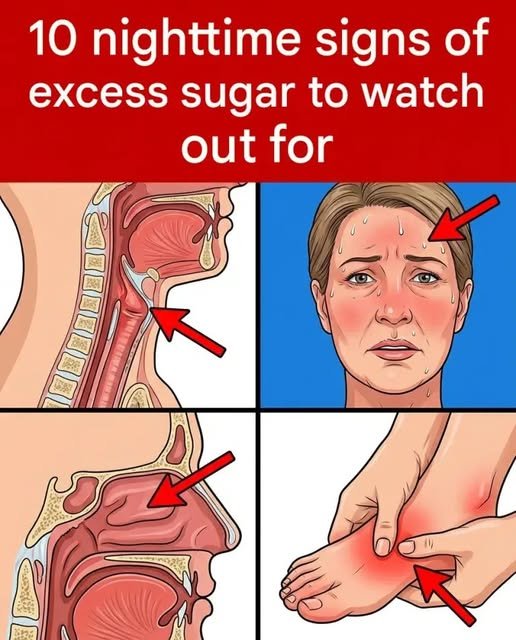
Here are 10 nighttime signs that may be associated with high blood sugar, along with detailed explanations.
1. Frequent Urination During the Night (Nocturia)
One of the most common symptoms of high blood sugar is waking up several times to urinate.
Why it happens:
- Excess glucose enters the urine when blood sugar is very high.
- Water follows the glucose, increasing urine production.
- The kidneys work harder to remove excess sugar.
Possible effects:
- Interrupted sleep
- Fatigue the next day
- Increased risk of dehydration
2. Excessive Thirst at Night
Many people with elevated blood sugar wake up feeling extremely thirsty.
Why it happens:
- Frequent urination causes fluid loss.
- The body signals thirst to replace lost fluids.
You may notice:
- Dry mouth
- Constant need to drink water
- Waking multiple times for a drink
3. Dry Mouth
High blood sugar can reduce saliva production and contribute to dehydration.
Symptoms include:
- Sticky or dry mouth
- Sore throat upon waking
- Difficulty swallowing
Possible consequences:
- Bad breath
- Increased risk of cavities and gum disease
4. Restless or Poor-Quality Sleep
Blood sugar fluctuations can make it difficult to stay asleep.
Possible reasons:
- Thirst or urination interrupts sleep.
- High blood sugar may contribute to discomfort and restlessness.
- Hormonal changes related to blood sugar regulation can affect sleep quality.
Signs:
- Frequent awakenings
- Feeling unrefreshed in the morning
5. Night Sweats
Some people experience sweating during sleep.
Important note:
- Night sweats are more commonly linked to low blood sugar (hypoglycemia) in people taking insulin or certain diabetes medications.
- High blood sugar itself is a less common direct cause, though it may contribute in some cases.
6. Leg Cramps or Tingling
Persistently high blood sugar can damage nerves over time.
Symptoms:
- Tingling
- Burning sensations
- Numbness
- Pain or cramps, especially in the feet and legs
These symptoms may become more noticeable at night.
7. Loud Snoring or Sleep Apnea
People with type 2 diabetes have a higher risk of obstructive sleep apnea.
Symptoms include:
- Loud snoring
- Pauses in breathing
- Gasping for air
- Morning headaches
- Daytime sleepiness
Sleep apnea can also make blood sugar harder to control.
8. Nighttime Hunger
Despite eating enough during the day, some people wake feeling hungry.
Possible reasons:
- Blood sugar fluctuations
- Insulin resistance affecting how the body uses glucose
This symptom alone is not specific to diabetes.
9. Rapid Heartbeat or Feeling Unwell
Very high blood sugar can sometimes cause:
- Increased heart rate
- Restlessness
- Feeling overheated
- Difficulty getting comfortable
If blood sugar becomes dangerously high, especially in people with diabetes, it can lead to serious medical emergencies that require prompt treatment.
10. Morning Fatigue Despite a Full Night in Bed
People with poorly controlled blood sugar often wake feeling exhausted.
Why it happens:
- Repeated awakenings during the night
- Dehydration
- The body’s cells cannot efficiently use glucose for energy
Common complaints include:
- Brain fog
- Difficulty concentrating
- Low energy throughout the day
Why High Blood Sugar Disrupts Sleep
High blood sugar can affect sleep by:
- Increasing urine production
- Causing dehydration
- Triggering thirst
- Contributing to nerve discomfort
- Being associated with conditions like sleep apnea
- Causing blood sugar fluctuations during the night
Poor sleep can also make blood sugar harder to control, creating a cycle where each problem worsens the other.
When to Seek Medical Advice
You should speak with a healthcare professional if you experience:
- Frequent nighttime urination
- Persistent excessive thirst
- Unexplained weight loss
- Blurred vision
- Constant fatigue
- Numbness or tingling in your feet
- Symptoms of sleep apnea (loud snoring, choking, or pauses in breathing)
If you have diabetes, these symptoms may indicate that your blood sugar management needs adjustment.
Ways to Improve Blood Sugar and Sleep
- Monitor your blood sugar as recommended by your healthcare provider.
- Eat balanced meals with plenty of vegetables, lean protein, and whole grains.
- Limit sugary drinks and refined carbohydrates, especially close to bedtime.
- Stay physically active most days of the week.
- Drink enough water during the day, while avoiding excessive fluids immediately before bed if nighttime urination is a problem.
- Maintain a regular sleep schedule.
- Follow your prescribed diabetes treatment plan.
Important reminder
These nighttime symptoms are not unique to high blood sugar. They can also result from other conditions such as urinary tract problems, sleep disorders, hormonal changes, medications, or dehydration. The only way to confirm high blood sugar is with appropriate testing, such as a blood glucose measurement or an HbA1c test interpreted by a healthcare professional. If symptoms are severe or persistent, seek medical evaluation.