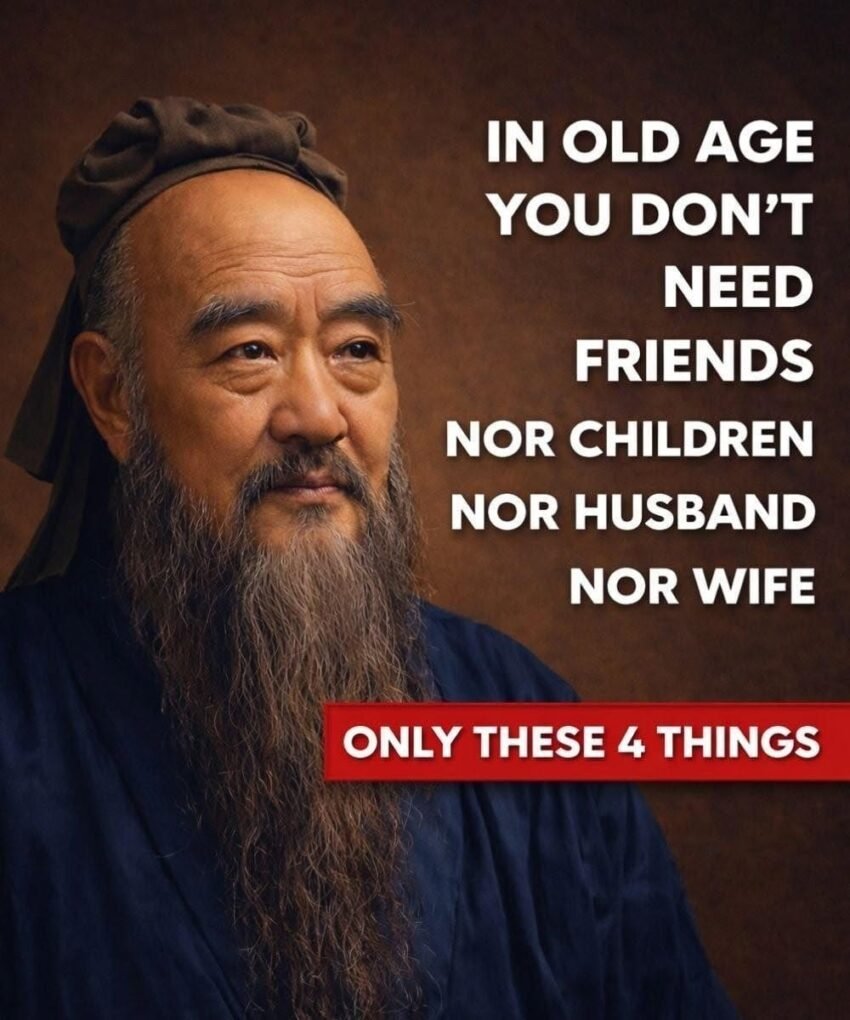
Here are four Confucian moral principles that can help create a more balanced and fulfilling old age:
1. Ren (仁) — Compassion, Humanity, and Kindness
Meaning:
Ren is considered the highest Confucian virtue. It refers to having a humane heart: showing kindness, empathy, respect, and concern for others.
Application in old age:
- Older adults can strengthen their sense of purpose by caring for family, friends, and the wider community.
- Compassion helps prevent isolation because meaningful relationships are maintained through generosity and understanding.
- Practicing kindness creates emotional well-being and a sense of belonging.
Examples:
- Sharing wisdom and experiences with younger generations.
- Offering support to family members without expecting rewards.
- Treating others with patience and respect, even during disagreements.
Benefit for aging:
A life guided by Ren allows older people to remain emotionally connected and valued rather than feeling disconnected from society.
2. Xiao (孝) — Filial Respect and Responsibility Toward Family
Meaning:
Xiao means respect and devotion toward parents and ancestors. It emphasizes strong family bonds, gratitude, and responsibility between generations.
Application in old age:
- Confucian thought views family relationships as a source of emotional stability and moral support.
- Older adults can contribute by maintaining family traditions, sharing memories, and guiding younger relatives.
- At the same time, elders should encourage mutual respect rather than demanding authority.
Examples:
- Teaching grandchildren cultural values and life lessons.
- Maintaining communication with family members.
- Showing appreciation for the care and support received from others.
Benefit for aging:
Strong family connections provide companionship, emotional security, and a feeling that one’s life continues to influence future generations.
3. Zhi (智) — Wisdom, Knowledge, and Lifelong Learning
Meaning:
Zhi represents wisdom and the ability to understand what is right and appropriate. Confucius valued continuous learning throughout life.
Application in old age:
- Aging should be viewed as a period of continued growth, not merely decline.
- Older adults can continue learning new skills, exploring ideas, and reflecting on life experiences.
- Wisdom gained through experience can be used to help others.
Examples:
- Reading, studying, or learning new technology.
- Participating in community discussions or educational activities.
- Reflecting on past experiences to make better decisions.
Benefit for aging:
Lifelong learning keeps the mind active, improves confidence, and gives older adults a continuing sense of purpose.
4. Li (禮) — Respect, Proper Conduct, and Harmony
Meaning:
Li refers to appropriate behavior, social manners, rituals, and respect for others. It encourages people to live with discipline and consideration.
Application in old age:
- Maintaining good habits and respectful communication improves relationships.
- A balanced routine involving health, family, social activities, and personal reflection supports well-being.
- Respecting social changes helps older adults remain connected with younger generations.
Examples:
- Practicing gratitude and politeness.
- Accepting different viewpoints with patience.
- Maintaining healthy daily routines and responsibilities.
Benefit for aging:
Li creates inner discipline and social harmony, helping older adults live with dignity and peace.
Conclusion: A Confucian Path to a Fuller Old Age
According to Confucian moral philosophy, a fulfilling old age is not defined only by physical health or material comfort. It is built through good character, meaningful relationships, continued learning, and harmony with others.
The four principles can be summarized as:
- Ren (仁): Live with compassion and kindness.
- Xiao (孝): Maintain gratitude and family connections.
- Zhi (智): Continue learning and developing wisdom.
- Li (禮): Practice respect, discipline, and social harmony.
Together, these values encourage older adults to see later life as a stage of continued contribution, reflection, and moral growth rather than simply a period of decline.