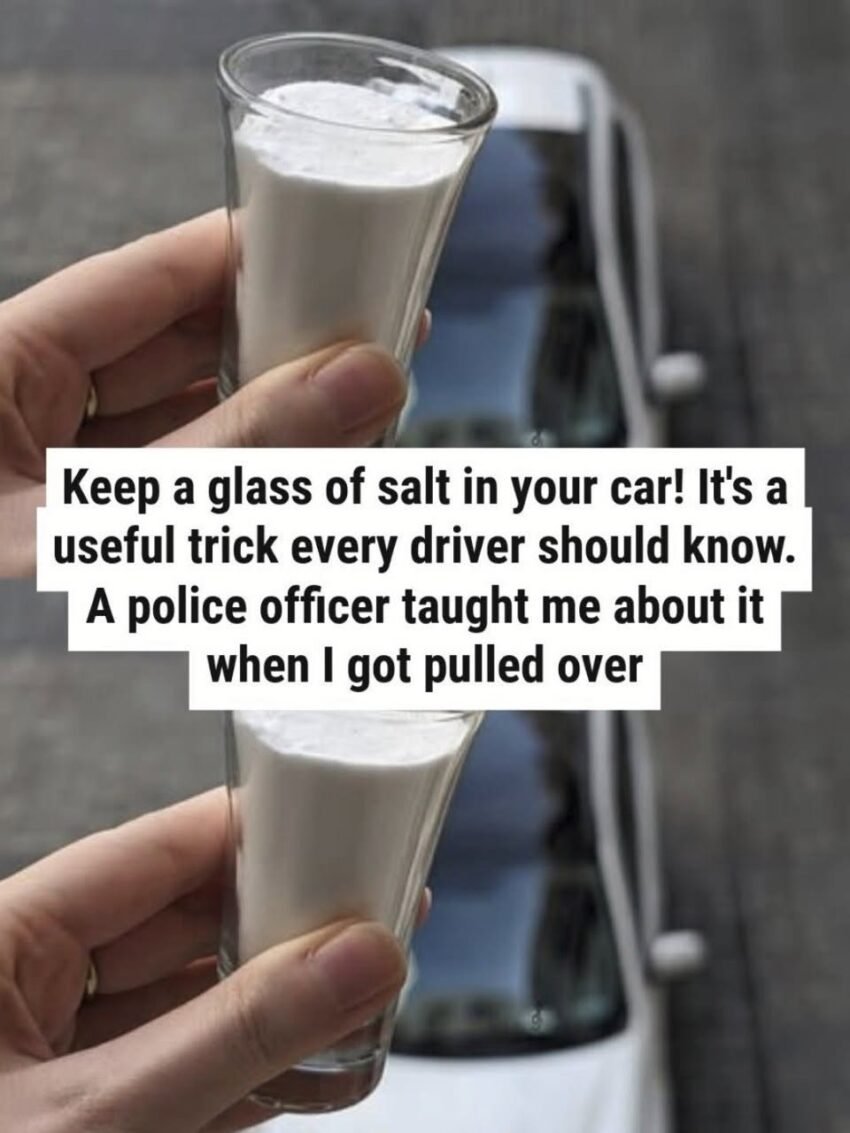
The idea of putting one glass of salt in your car is a popular “car hack” that is often shared online. The claim is usually that a bowl or glass of salt can remove bad smells, reduce moisture, prevent foggy windows, or protect the car interior. Some parts of this idea have a scientific basis, but many viral claims exaggerate what salt can do.
1. Salt as a moisture absorber (the science)
Salt (sodium chloride) is hygroscopic, meaning it can attract and hold some water molecules from the air. When placed in a humid environment, salt can absorb moisture from the surrounding air.
Inside a car, moisture can come from:
- Wet shoes or clothing
- Rainwater brought inside
- Snow or mud on floor mats
- Condensation caused by temperature changes
- Humid weather
A cup of salt may absorb a small amount of this moisture and can slightly help reduce dampness in a confined space.
However, ordinary table salt is not one of the strongest moisture absorbers. Materials such as silica gel, calcium chloride, or dedicated car dehumidifiers work much better.
2. Can salt stop car windows from fogging?
The claim:
A glass of salt left in the car will prevent windshield fog.
Reality:
Salt may help slightly by absorbing some humidity, but it will not replace proper defogging methods.
Fog forms when:
- Warm, moist air inside the car touches cold glass.
- Water vapor condenses into tiny droplets.
The best ways to prevent foggy windows are:
- Use the car’s defrost/defog setting
- Turn on the air conditioner, even in winter (AC removes moisture)
- Keep the cabin air filter clean
- Avoid leaving wet items inside
- Use a proper moisture absorber
A cup of salt alone cannot remove enough moisture to make a major difference.
3. Can salt remove bad smells from a car?
Salt does not work like activated charcoal or baking soda.
Bad smells usually come from:
- Bacteria in carpets and seats
- Mold growth
- Food spills
- Smoke residue
- Dirty air-conditioning systems
Salt can absorb some moisture that supports mold growth, but it does not chemically trap odors effectively.
Better odor solutions:
- Activated charcoal bags
- Cleaning fabric surfaces
- Washing floor mats
- Checking the AC system
- Baking soda for some surface odors
4. Can salt protect against mold?
Moisture encourages mold growth. By absorbing a small amount of humidity, salt might slightly reduce conditions favorable for mold.
But:
- A small glass of salt will saturate quickly in a damp car.
- It will not control high humidity.
- It will not remove existing mold.
For mold prevention:
- Dry wet carpets quickly.
- Remove standing water.
- Clean damp areas.
- Use a proper car dehumidifier.
5. How to use salt in a car safely (if you want to try it)
If you want to experiment:
- Put ½–1 cup of coarse salt in an open container.
- Place it somewhere stable, such as:
- Cup holder
- Door pocket
- Footwell (where it cannot spill)
- Check it every few days.
- Replace it when it becomes damp or clumpy.
Avoid:
- Leaving an uncovered glass where it can spill.
- Putting salt directly on carpets or seats.
- Using it as a replacement for cleaning or ventilation.
Salt water can contribute to corrosion if spilled on metal parts.
6. Other useful “car hacks” involving salt
Removing frost from windows
Salt lowers the freezing point of water, which is why salt is used on icy roads. However, rubbing salt directly on car paint or glass is not recommended because salt can promote corrosion and damage surfaces over time.
Cleaning stains
Salt is sometimes used with other ingredients for household cleaning, but it is not a universal car cleaner.
Final verdict
Putting a glass of salt in your car is a low-cost trick that may provide a small benefit in humid conditions, mainly by absorbing a little moisture. It is not a powerful dehumidifier, odor remover, or fog-prevention solution.
For real results:
- Use a proper moisture absorber for humidity.
- Clean the interior regularly.
- Keep the AC system maintained.
- Dry wet items quickly.
The “salt in your car” hack is partly based on real chemistry, but its benefits are often overstated online.