Shocking Sleep Positions That Could Steal Your Life: Are You at Risk?


Sleep is essential for life, but did you know that the position in which you sleep can affect your breathing, heart health, circulation, spinal alignment, and overall well-being?
Some sleeping positions can worsen existing medical conditions, while others may increase certain health risks in vulnerable people.
However, there is an important distinction: no ordinary sleeping position is automatically deadly for a healthy adult. Many frightening claims about sleep positions are exaggerated. The real danger often comes from underlying health conditions, restricted breathing, unsafe infant sleep environments, or particular circumstances.
Let’s explore the science, potential dangers, warning signs, and healthiest sleeping positions in detail.
1. Sleeping flat on your back: The hidden breathing risk

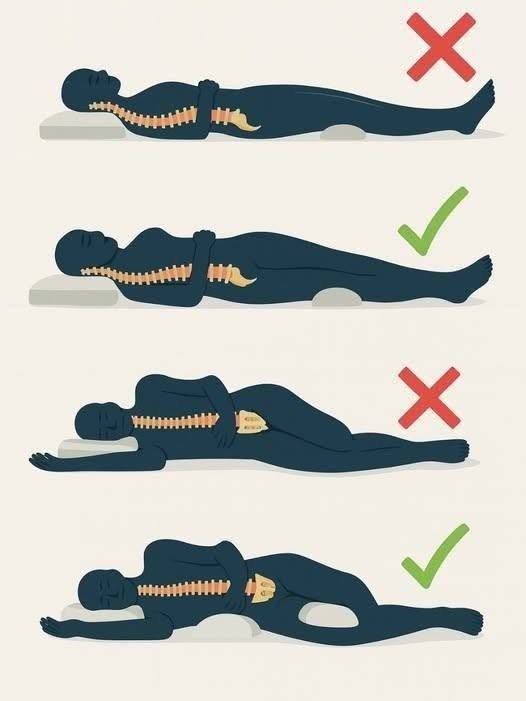
Sleeping on your back is comfortable for many people. It can also help maintain a neutral spinal position when the correct pillow and mattress are used.
But there is a potential problem: gravity can cause the tongue and soft tissues in the throat to move backward, narrowing the airway.
What can happen?
-
The airway may become narrower during sleep.
-
Breathing may become partially or completely interrupted.
-
Oxygen levels may temporarily decrease.
-
The brain may repeatedly wake the person briefly to restore breathing.
-
Sleep quality may deteriorate.
This is particularly important for people with obstructive sleep apnea (OSA).
Warning signs of sleep apnea
-
Loud, frequent snoring.
-
Repeated pauses in breathing noticed by a partner.
-
Waking up gasping or choking.
-
Morning headaches.
-
Excessive daytime sleepiness.
-
Difficulty concentrating.
People with positional sleep apnea may experience more breathing interruptions when sleeping on their backs than on their sides. Side-sleeping can help some people, although it does not replace prescribed treatment such as CPAP when needed.
Who should be careful? People with diagnosed sleep apnea, significant snoring, obesity-related airway narrowing, or nighttime breathing difficulties.
2. Sleeping on your stomach: Pressure on your neck and spine

Stomach sleeping, also called prone sleeping, is one of the more challenging positions for maintaining comfortable spinal alignment.
When you sleep on your stomach, you generally need to turn your head to one side to breathe.
Potential problems
-
Neck strain: Keeping your head rotated for hours can strain neck muscles.
-
Back discomfort: The lower back may arch excessively.
-
Shoulder pressure: Your shoulders may experience prolonged compression.
-
Nerve irritation: Certain positions may aggravate existing nerve-related symptoms.
Can stomach sleeping cause sudden death?
For a healthy adult, there is no good evidence that ordinary stomach sleeping directly causes sudden death.
However, stomach sleeping is dangerous for babies under one year old because it increases the risk of sleep-related infant death and suffocation.
For adults, the main concerns are comfort, pain, and individual breathing conditions.
3. Sleeping on your right side: Could it worsen acid reflux?

Right-side sleeping is generally safe for healthy adults. However, it may aggravate nighttime acid reflux in people with gastroesophageal reflux disease (GERD).
Why does this happen?
The stomach and esophagus have a particular anatomical relationship.
When someone with reflux sleeps on their right side, stomach contents may more easily move toward the esophagus.
Possible symptoms include:
-
Burning sensation in the chest.
-
Sour taste in the mouth.
-
Regurgitation.
-
Nighttime coughing.
-
Interrupted sleep.
Research suggests that right-side sleeping can increase nighttime acid exposure compared with left-side sleeping.
Important: Acid reflux is not normally a sudden-death risk. But persistent reflux deserves medical attention, especially when symptoms are severe.
Never assume new chest pain is simply acid reflux. Chest pressure, shortness of breath, sweating, or pain spreading to the arm or jaw can indicate a heart emergency.
4. Sleeping on your back during late pregnancy: An important warning

Pregnancy changes the way the body circulates blood.
During later pregnancy, lying flat on the back can allow the weight of the uterus to compress major blood vessels, particularly the inferior vena cava.
This can reduce blood returning to the heart and may affect circulation.
Possible symptoms
-
Dizziness.
-
Nausea.
-
Sweating.
-
Feeling faint.
-
Shortness of breath.
-
General discomfort.
What is the safer position?
From around 28 weeks of pregnancy, pregnant women are generally advised to go to sleep on either side rather than flat on their backs.
The left side is often recommended for comfort and circulation, but sleeping on the right side is also acceptable.
If you wake up on your back, don’t panic. Simply turn onto your side and go back to sleep.
5. Sleeping face-down with the nose and mouth obstructed: A serious suffocation risk

This is different from ordinary stomach sleeping.
The real danger occurs when the nose and mouth become obstructed by soft bedding, pillows, or other objects, particularly when someone cannot move or respond normally.
Situations that increase concern include:
-
Severe alcohol intoxication.
-
Opioid or sedative use.
-
Unconsciousness.
-
Severe impairment of movement.
-
Sleeping on a surface with soft bedding that can cover the face.
In these circumstances, breathing can become dangerously impaired.
The important lesson: An unobstructed airway and the ability to respond or reposition are critical.
If someone is unresponsive or breathing abnormally, call emergency services immediately.
6. Sleeping in the wrong position for heart failure

Some people with heart failure find it difficult to breathe when lying completely flat.
This condition can be associated with orthopnea.
Why does it happen?
Heart failure can cause fluid to accumulate in the body and lungs.
When someone lies flat, fluid redistribution can make breathing more difficult.
Warning signs
-
Needing several pillows to sleep.
-
Waking suddenly feeling breathless.
-
Coughing more when lying down.
-
Swelling in the ankles or legs.
-
Feeling better when sitting upright.
A person who suddenly develops severe breathlessness while lying down needs urgent medical assessment.
The American Heart Association notes that sleeping position can matter in people with heart failure, although there is no single universally dangerous side for everyone.
7. The most dangerous sleeping position for babies
Important infant safety warning


This is one of the most important parts of the entire discussion.
For babies younger than one year, stomach and side sleeping increase the risk of sudden unexpected infant death and accidental suffocation.
Why is stomach sleeping dangerous for babies?
-
Babies may rebreathe exhaled air.
-
Oxygen levels may fall.
-
Carbon dioxide levels may increase.
-
Their ability to reposition their heads and bodies is limited.
The safest infant sleep rules
According to the American Academy of Pediatrics:
-
Always place babies on their backs for naps and nighttime sleep.
-
Use a firm, flat, non-inclined mattress.
-
Keep pillows, blankets, stuffed toys, and soft objects out of the crib.
-
Use a separate, safe infant sleep surface.
-
Continue back-sleeping until the baby reaches one year of age.
Even babies with acid reflux should generally sleep on their backs.
8. Which sleeping position is healthiest?
There is no single perfect sleeping position for every adult. The best position depends on your medical conditions, comfort, and breathing.

Left-side sleeping
Good option for many people
-
May reduce nighttime acid reflux.
-
Often recommended during late pregnancy.
-
May improve comfort for people with certain digestive problems.

Right-side sleeping
-
Generally safe for healthy adults.
-
May be more comfortable for some people with heart conditions.
-
May worsen acid reflux in some individuals.

Back sleeping
-
Can support neutral spinal alignment.
-
May be comfortable for people with certain back problems.
-
Can worsen obstructive sleep apnea in some individuals.

Stomach sleeping
-
May reduce snoring for some people.
-
Can strain the neck and lower back.
-
Often less suitable for people with chronic neck or back pain.
9. Seven warning signs that your sleeping position may be affecting your health
Pay attention if you regularly experience:
-
Waking up gasping for air.
-
Loud snoring with pauses in breathing.
-
Morning headaches.
-
Chest discomfort when lying down.
-
Frequent nighttime acid reflux.
-
Numbness or tingling in your arms or legs.
-
Shortness of breath that improves when sitting upright.
These symptoms do not necessarily mean your sleeping position is dangerous. They may indicate an underlying condition that needs medical evaluation.
Seek emergency help for severe breathing difficulty, fainting, new chest pressure, or other signs of a possible heart or respiratory emergency.
10. Five practical ways to improve your sleeping position


-
Choose a pillow that keeps your neck aligned with your spine.
-
If sleeping on your side, place a pillow between your knees.
-
If you experience acid reflux, try sleeping on your left side and elevating the head of your bed.
-
Avoid heavy meals immediately before bedtime.
-
Maintain a consistent sleep schedule and seek assessment for persistent snoring or breathing interruptions.
11. Myths versus scientific facts
|
Common claim |
What science says |
|---|---|
|
Sleeping on your back causes sudden death in everyone. |
False. It may worsen sleep apnea in susceptible adults. |
|
Left-side sleeping prevents all heart problems. |
False. No such evidence exists. |
|
Stomach sleeping kills adults. |
False. Ordinary stomach sleeping is not established as a cause of sudden death in healthy adults. |
|
Side sleeping is always healthier. |
Not necessarily. It depends on individual health conditions. |
|
Babies should sleep on their stomachs to prevent choking. |
False. Back sleeping is recommended. |
The American Heart Association emphasizes that evidence about the effects of sleeping position on overall heart and brain health remains limited.
12. Final conclusion: Are you at risk?
Your sleeping position can affect your health, but it is important not to become frightened by sensational headlines.
The most significant position-related concerns are:
-
Back sleeping in people with obstructive sleep apnea.
-
Back sleeping during late pregnancy.
-
Stomach or side sleeping in infants under one year.
-
Face obstruction in people who are unconscious or severely impaired.
-
Sleeping flat in people experiencing heart-failure-related breathing difficulties.
For most healthy adults, sleeping comfortably in a position that allows unrestricted breathing is perfectly reasonable.
13. Test your sleep health knowledge
Here are three important questions:
Question 1. Which position is recommended for babies under one year?
Question 2. Which side may help reduce nighttime acid reflux?
Question 3. Which sleeping position may worsen obstructive sleep apnea?
Further reliable reading:
Medical disclaimer: This information is educational and does not replace an individual medical assessment.