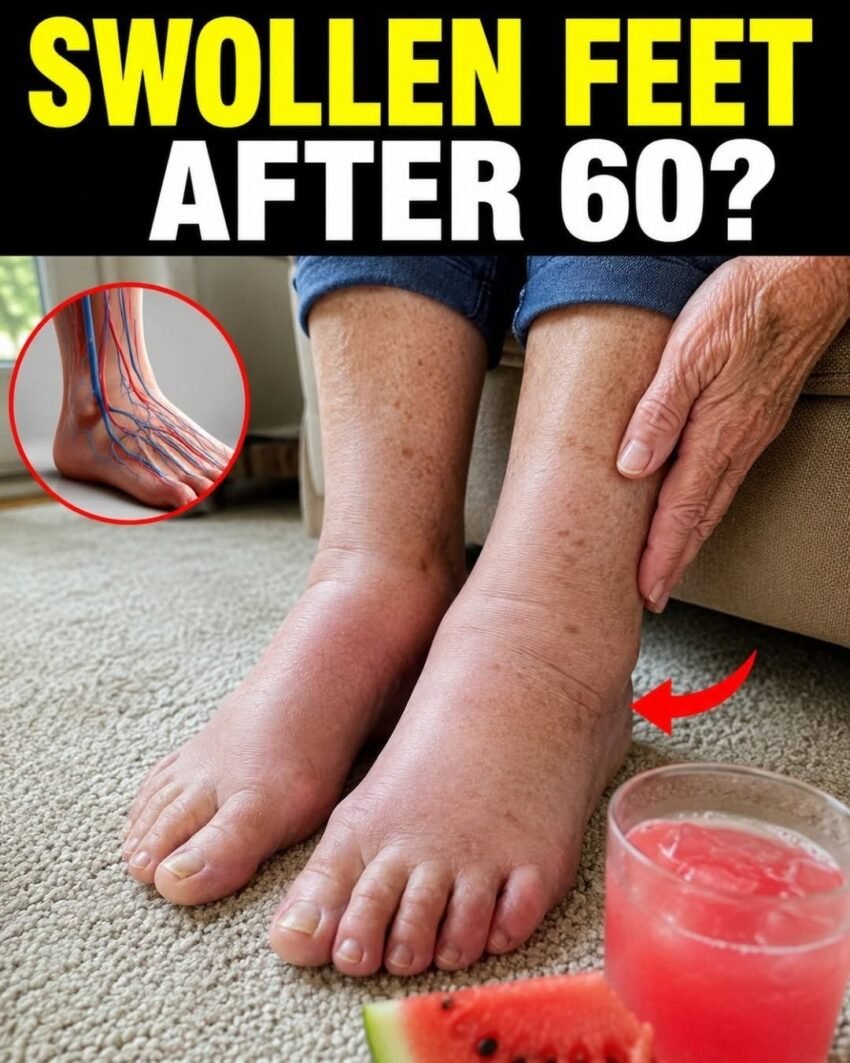
Swollen feet after age 60 are common, but they are worth paying attention to because swelling can come from many causes — some harmless and some needing medical evaluation. The medical term for swelling caused by fluid buildup is edema. It often appears in the feet, ankles, and lower legs because gravity causes fluid to collect there, especially after sitting or standing for long periods.
Common reasons for swollen feet after 60
1. Reduced circulation
As people age, blood vessels may become less elastic and circulation can slow. Blood may not return to the heart as efficiently from the legs, allowing fluid to build up around the ankles and feet.
2. Long periods of sitting or standing
Spending many hours sitting (watching TV, traveling, working at a desk) or standing can cause fluid to settle in the lower legs.
3. Vein problems
Chronic venous insufficiency can cause swelling, heaviness, aching, skin changes, or visible veins because leg veins do not move blood upward effectively.
4. Medication effects
Some medicines can contribute to swelling, including certain:
- Blood pressure medicines (especially some calcium channel blockers)
- Anti-inflammatory medicines
- Steroids
- Diabetes medications
- Hormone-related medicines
Do not stop prescribed medicines without discussing it with a healthcare professional.
5. Heart, kidney, or liver conditions
Swelling in both feet and ankles can sometimes be linked with conditions that affect the body’s ability to balance fluids, such as heart failure, kidney disease, or liver disease.
6. Diet and lifestyle factors
High salt intake, low physical activity, dehydration, and weight changes can contribute to fluid retention.
Daily habits that may help support comfort and circulation
1. Elevate your feet
Raise your feet above the level of your heart for about 15–30 minutes, a few times daily if possible.
How:
- Lie down comfortably
- Place pillows under your legs so your feet are higher than your chest
- Avoid putting pressure directly behind the knees
This helps encourage fluid to move away from the lower legs.
2. Move your ankles regularly
Gentle movement helps the calf muscles act like a pump to improve blood return.
Try:
- Ankle circles: 10–20 circles each direction
- Point and flex your toes
- Raise your heels while standing (if safe)
- Take short walks throughout the day
Even a few minutes of movement every hour can help if you sit for long periods.
3. Walk regularly
Walking supports:
- Blood circulation
- Leg muscle strength
- Joint flexibility
- Overall heart health
A practical goal is to take several short walks rather than trying to do one long walk if mobility is limited.
4. Reduce excess salt
Salt can cause the body to hold extra water.
Helpful steps:
- Limit processed foods
- Reduce salty snacks
- Read food labels
- Use herbs and spices instead of extra salt
5. Drink enough water
Some people reduce water intake when they notice swelling, but dehydration can sometimes worsen fluid balance.
Unless a doctor has advised fluid restriction:
- Drink water regularly
- Pay attention to thirst and urine color
6. Wear comfortable, supportive footwear
Shoes that are too tight can restrict circulation.
Look for:
- Proper width
- Good arch support
- Cushioning
- Adjustable straps if feet swell during the day
Avoid tight socks or footwear that leaves deep marks on the skin.
7. Consider compression socks (after medical advice)
Compression socks gently squeeze the legs to help prevent fluid from pooling.
They may help some people with:
- Mild ankle swelling
- Long periods of sitting
- Certain vein problems
However, people with circulation problems involving arteries may need medical advice before using them.
8. Maintain healthy weight and activity
Extra body weight can increase pressure on leg veins and joints. Regular gentle exercise can improve circulation and mobility.
Good options for many older adults include:
- Walking
- Swimming
- Chair exercises
- Gentle stretching
When swollen feet need medical attention
Seek medical advice promptly if swelling is:
- Sudden or severe
- Only in one leg
- Associated with pain, warmth, redness, or tenderness
- Accompanied by shortness of breath or chest pain
- Associated with a rapid increase in weight
- Causing skin ulcers or leaking fluid
One-sided leg swelling with pain can sometimes be a sign of a blood clot and needs urgent evaluation.
A simple daily routine for foot comfort
Morning
- Gentle ankle movements
- Drink water
- Wear supportive shoes
During the day
- Walk or move every hour
- Avoid sitting with feet hanging down for many hours
- Limit salty foods
Evening
- Elevate feet for 15–30 minutes
- Check feet for skin changes, sores, or unusual swelling
Regular attention to foot swelling after 60 can improve comfort and help identify problems early. If swelling is new, persistent, worsening, or accompanied by other symptoms, it is best to have it checked by a healthcare professional.