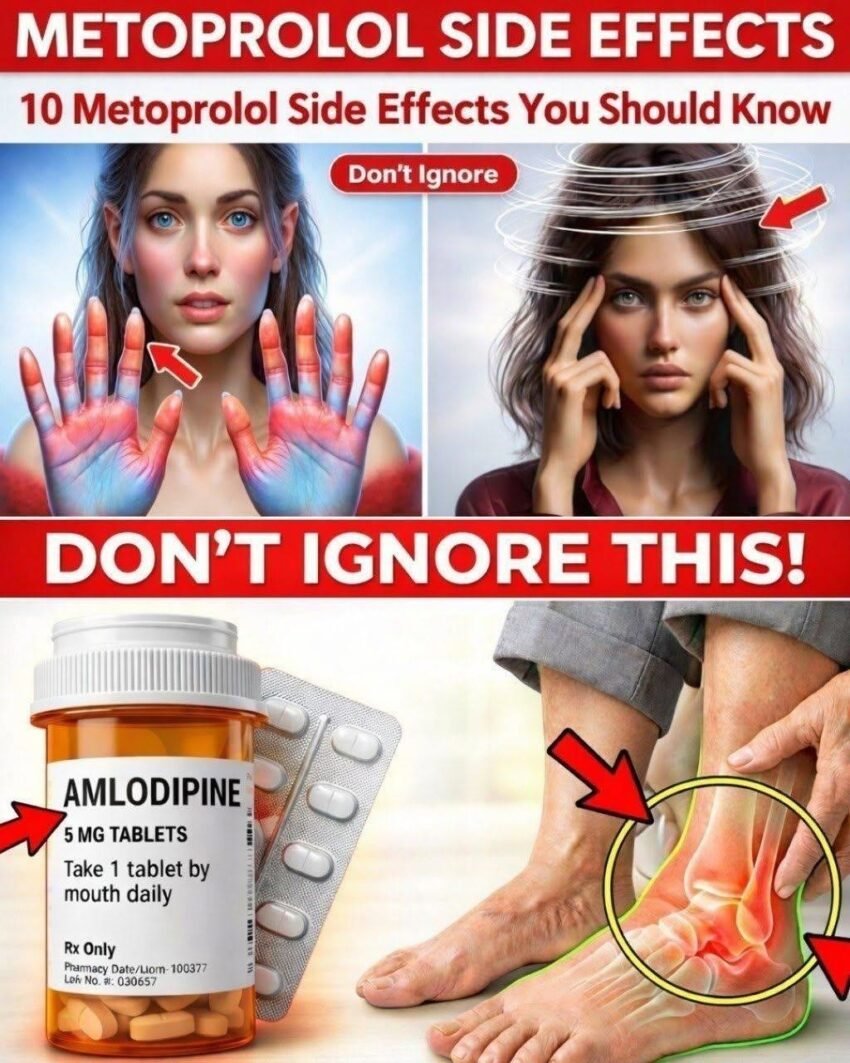
Below is a detailed explanation of 10 important side effects of metoprolol, including why they happen, how common they are, and when they require medical attention.
1. Fatigue and Tiredness (Very Common)
Why it happens
Metoprolol slows the heart rate and reduces the force of heart contractions. While this decreases the heart’s workload, it can also reduce the amount of oxygen-rich blood reaching your muscles during activity.
Symptoms
- Feeling unusually tired
- Low energy
- Needing more sleep
- Difficulty exercising
- Weakness
How common?
Fatigue is among the most commonly reported side effects, especially during the first few weeks after starting the medication or increasing the dose.
What helps
- Give your body 2–4 weeks to adjust.
- Stay hydrated.
- Exercise gently if approved by your doctor.
- Don’t stop the medication suddenly.
2. Slow Heart Rate (Bradycardia)
Why it happens
Metoprolol blocks beta-1 receptors in the heart, slowing electrical signals that control heartbeat.
Symptoms
- Heart rate below 60 beats per minute
- Dizziness
- Fainting
- Weakness
- Shortness of breath
When it’s dangerous
Seek urgent medical care if you experience:
- Fainting
- Severe dizziness
- Chest pain
- Confusion
- Difficulty breathing
3. Low Blood Pressure (Hypotension)
Metoprolol lowers blood pressure by reducing cardiac output.
Symptoms
- Lightheadedness
- Blurry vision
- Feeling faint
- Cold skin
- Weakness
Tips
- Rise slowly from sitting or lying down.
- Drink adequate fluids unless you’ve been told to restrict them.
- Monitor your blood pressure if advised.
4. Dizziness
This is often caused by lower blood pressure or a slower heart rate.
Symptoms
- Feeling like the room is spinning
- Poor balance
- Lightheadedness
Prevention
- Stand up slowly.
- Avoid sudden movements.
- Avoid driving until you know how the medication affects you.
5. Cold Hands and Feet
Why it happens
Metoprolol can reduce blood flow to the arms and legs.
Symptoms
- Cold fingers
- Cold toes
- Pale skin
- Numbness
- Tingling
People with poor circulation or Raynaud syndrome may notice this more.
6. Depression and Mood Changes
Some people report:
- Sadness
- Reduced motivation
- Irritability
- Anxiety
- Sleep changes
Research has been mixed on whether beta-blockers directly cause depression, but mood changes can occur in some individuals.
If you experience persistent low mood or thoughts of self-harm, seek medical help promptly.
7. Sexual Dysfunction
Men may experience:
- Erectile dysfunction
- Reduced libido
- Difficulty maintaining an erection
Women may notice:
- Reduced sexual desire
- Difficulty becoming aroused
High blood pressure itself can also contribute to these issues, making it difficult to determine the exact cause.
8. Breathing Problems
Although metoprolol is relatively selective for the heart, it can still affect the lungs at higher doses.
People with:
- Asthma
- Chronic obstructive pulmonary disease
may experience:
- Wheezing
- Chest tightness
- Shortness of breath
Seek emergency care if breathing becomes difficult.
9. Sleep Problems and Vivid Dreams
Some patients report:
- Insomnia
- Nightmares
- Frequent waking
- Very vivid dreams
These symptoms are generally not dangerous but can affect quality of life.
10. Masking Low Blood Sugar
People with Diabetes mellitus should be aware that metoprolol can hide some warning signs of low blood sugar.
Normally, low blood sugar may cause:
- Rapid heartbeat
- Trembling
- Anxiety
Metoprolol can reduce these symptoms, making hypoglycemia harder to recognize.
Other warning signs such as sweating, hunger, and confusion may still occur.
Rare but Serious Side Effects
Although uncommon, seek immediate medical attention if you experience:
- Severe allergic reaction (rash, swelling of the face or throat, trouble breathing)
- Fainting
- Very slow heartbeat
- Severe chest pain
- New or worsening heart failure symptoms (swelling of the legs, sudden weight gain, increasing shortness of breath)
Never Stop Metoprolol Suddenly
Abruptly stopping metoprolol can lead to a “rebound” effect, including:
- Rapid heart rate
- High blood pressure
- Chest pain
- Increased risk of heart attack
- Dangerous heart rhythm problems
Your doctor will usually recommend gradually reducing the dose if it needs to be discontinued.
Who Is More Likely to Experience Side Effects?
The risk may be higher in:
- Older adults
- People with kidney or liver disease
- Individuals taking multiple blood pressure medications
- People with asthma or COPD
- People with diabetes
- Those with naturally slow heart rates
When to Contact Your Doctor
Contact your healthcare provider if you have:
- Persistent fatigue that doesn’t improve
- Heart rate consistently below the target recommended for you
- Frequent dizziness or fainting
- Swelling of the feet or ankles
- Worsening shortness of breath
- Depression or significant mood changes
- Sexual side effects that concern you
Key Takeaway
Metoprolol is an effective medication that has been shown to reduce the risk of heart attacks, improve outcomes in certain heart conditions, and control blood pressure and heart rhythm. Most side effects are mild and often improve as the body adjusts. Serious side effects are uncommon but require prompt medical attention. Never stop taking metoprolol without first discussing it with the healthcare professional who prescribed it.