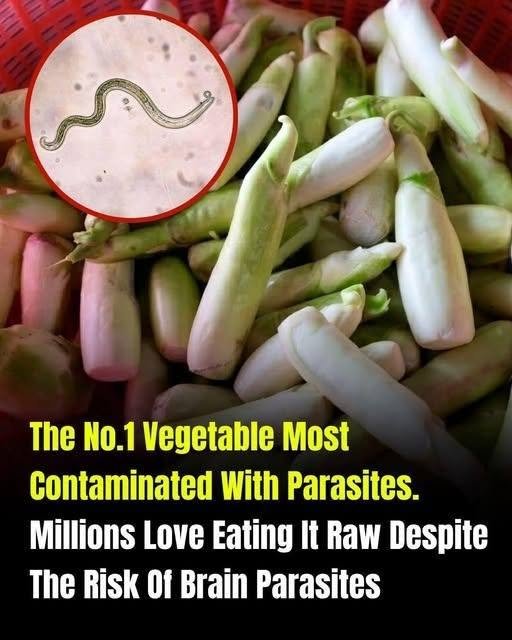
The vegetable often described as one of the riskiest for carrying parasites when eaten raw is watercress. This is because it can grow in or near freshwater environments, where it may become contaminated with the larvae of certain parasites, especially liver flukes. However, it is important to understand that any raw vegetable can carry parasites or harmful microbes if contaminated, and watercress is not automatically unsafe when properly grown, washed, and handled.
Why watercress can carry parasites
Watercress is an aquatic or semi-aquatic leafy vegetable that grows naturally in streams, springs, and wet soil. In some regions, wild watercress grows in areas where livestock such as sheep or cattle may graze nearby.
A major parasite associated with raw watercress is:
Fasciola (liver fluke)
- Fasciola hepatica and Fasciola gigantica are parasitic flatworms that infect the liver and bile ducts of humans and animals.
- The parasite’s life cycle involves:
- Eggs released in the feces of infected animals.
- Eggs reaching freshwater.
- Development inside certain freshwater snails.
- Larvae attaching to aquatic plants such as watercress.
- Humans becoming infected by eating contaminated raw plants.
What happens if a person gets infected?
A liver fluke infection (called fascioliasis) may cause:
Early symptoms (weeks after infection)
- Fever
- Abdominal pain (often on the right side)
- Nausea
- Loss of appetite
- Diarrhea
- Fatigue
- Skin rashes or allergic reactions
Later symptoms (months or years)
The parasites can move into the bile ducts and may cause:
- Chronic abdominal discomfort
- Enlarged liver
- Inflammation of the bile ducts
- Jaundice in severe cases
- Gallbladder or liver complications
Many infections are treatable with antiparasitic medicines such as triclabendazole, prescribed by a healthcare professional.
Why people eat watercress raw
Watercress is popular raw because it has:
- A peppery, slightly spicy flavor
- High levels of vitamins such as vitamin C and vitamin K
- Minerals including calcium and potassium
- Plant compounds with antioxidant properties
It is commonly used in:
- Salads
- Sandwiches
- Smoothies
- Garnishes
- Fresh juices
Other risks of eating raw vegetables
Parasites are only one concern. Raw vegetables may also carry:
Bacteria
Examples:
- E. coli
- Salmonella
- Listeria
These can come from:
- Contaminated irrigation water
- Animal manure
- Poor handling during harvesting or preparation
Protozoan parasites
Examples:
- Giardia
- Cryptosporidium
- Cyclospora
These may contaminate leafy greens and other produce.
How to safely eat watercress and other raw vegetables
To reduce risk:
- Buy commercially grown watercress
- Avoid collecting wild watercress from streams or unknown freshwater sources.
- Wash thoroughly
- Rinse under clean running water.
- Remove damaged leaves and dirt.
- Washing reduces contamination but may not eliminate all parasites.
- Cook when possible
- Cooking kills liver fluke larvae and many harmful microbes.
- Avoid raw watercress if you are at higher risk
- People with weakened immune systems, pregnant individuals, young children, or older adults may want to be more cautious with raw aquatic plants.
- Use safe water
- Washing produce with contaminated water can add risk rather than remove it.
Vegetables commonly eaten raw that can also carry contamination
Besides watercress, other raw vegetables that have been linked to foodborne illness include:
- Lettuce and other leafy greens
- Sprouts (especially alfalfa and bean sprouts)
- Spinach
- Herbs such as parsley and cilantro
- Green onions
Sprouts are particularly notable because the warm, moist conditions needed for sprouting seeds can also allow bacteria to multiply.
Bottom line
Raw watercress is one of the vegetables most strongly associated with parasite transmission, especially liver flukes, because of its connection to freshwater environments. It remains a nutritious food, but eating it raw requires attention to sourcing, washing, and food safety. Properly grown and handled watercress from reliable sources is much lower risk than wild-picked watercress from streams or ponds.