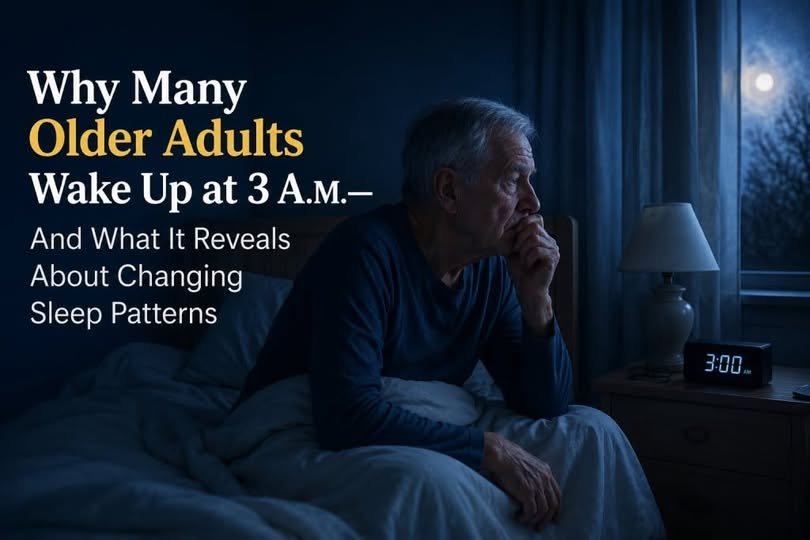
Here’s a detailed explanation of why this happens and what it reveals about changing sleep patterns.
Why Do Older Adults Wake Up Around 3 A.M.?
There isn’t anything uniquely significant about 3:00 a.m. itself. Instead, many older adults naturally experience awakenings during the second half of the night because of changes in their sleep cycle.
1. Changes in the Body’s Internal Clock
The body’s circadian rhythm acts as an internal 24-hour clock.
As people age:
- They become sleepy earlier in the evening.
- They wake earlier in the morning.
- Deep sleep becomes shorter.
- Light sleep becomes more common.
This means that if someone goes to bed at 8:30 or 9:00 p.m., waking at 3:00 a.m. may occur after six hours of sleep, making it harder to return to sleep.
2. Less Deep Sleep
Older adults spend less time in slow-wave sleep, the deepest and most restorative stage.
As a result:
- Small noises wake them more easily.
- Temperature changes disturb sleep.
- Minor discomfort becomes noticeable.
- They become aware of awakenings that younger adults might sleep through.
Even if they wake only briefly, they may remain awake longer.
3. Reduced Melatonin Production
Melatonin is the hormone that helps regulate sleep.
With age:
- The body often produces less melatonin.
- Melatonin is released earlier in the evening.
- The sleep signal weakens during the night.
This can contribute to waking in the early morning hours.
4. Increased Need to Use the Bathroom
One of the most common reasons older adults wake during the night is nocturia (frequent nighttime urination).
Possible causes include:
- Enlarged prostate (in men)
- Overactive bladder
- Diabetes
- Certain medications
- Drinking fluids late in the evening
Once awake, returning to sleep may be difficult.
5. Medical Conditions
Several health conditions can interrupt sleep.
These include:
- Arthritis pain
- Chronic back pain
- Heart disease
- Acid reflux (GERD)
- Asthma
- Chronic lung disease
- Parkinson’s disease
- Dementia
Pain or discomfort often becomes more noticeable when the surroundings are quiet.
6. Sleep Apnea
Obstructive sleep apnea is very common in older adults.
People may:
- Stop breathing briefly many times each night.
- Wake repeatedly without remembering why.
- Snore loudly.
- Feel tired during the day.
These repeated awakenings may occur throughout the night, including around 3 a.m.
7. Medication Effects
Some medications interfere with sleep, including:
- Diuretics
- Certain antidepressants
- Steroids
- Some blood pressure medicines
- Stimulants
- Decongestants
Taking these medications later in the day can increase nighttime awakenings.
8. Anxiety and Stress
When people wake during the night, stress hormones may rise.
Common thoughts include:
- Worrying about family
- Financial concerns
- Health issues
- Bereavement
- Loneliness
Once the mind becomes active, falling asleep again becomes more difficult.
9. Depression
Depression often changes sleep patterns.
Symptoms include:
- Waking very early
- Difficulty returning to sleep
- Low mood
- Loss of interest
- Fatigue during the day
In some people, early morning awakening is one of the earliest signs.
How Sleep Changes With Age
Normal aging changes the structure of sleep.
| Younger Adults | Older Adults |
|---|---|
| More deep sleep | Less deep sleep |
| Fewer awakenings | More awakenings |
| Later bedtime | Earlier bedtime |
| Longer continuous sleep | More fragmented sleep |
| Easier to fall back asleep | Harder to return to sleep |
These changes do not necessarily mean a person needs less sleep. Most older adults still benefit from about 7–8 hours of sleep each night.
Is Waking at 3 A.M. Normal?
It can be normal if:
- It happens occasionally.
- You fall back asleep within 15–30 minutes.
- You feel rested during the day.
It may warrant medical evaluation if it:
- Happens almost every night.
- Causes daytime sleepiness.
- Is accompanied by loud snoring or pauses in breathing.
- Occurs with chest pain, shortness of breath, or significant mood changes.
- Persists for weeks despite good sleep habits.
What Helps Improve Sleep?
Many people benefit from simple lifestyle changes.
Keep a consistent sleep schedule
Go to bed and wake up at the same time every day.
Get morning sunlight
Natural light helps keep the body’s internal clock synchronized.
Stay physically active
Regular exercise during the day can improve sleep quality. Avoid vigorous exercise close to bedtime.
Limit caffeine and alcohol
Caffeine can remain in the body for several hours, and alcohol may make it easier to fall asleep initially but often disrupts sleep later in the night.
Reduce evening fluids
If nighttime bathroom trips are a problem, reducing fluid intake a few hours before bed may help, unless a healthcare professional has advised otherwise.
Create a comfortable sleep environment
A cool, quiet, and dark bedroom can reduce unnecessary awakenings.
Avoid watching the clock
Checking the time after waking can increase anxiety and make it harder to fall back asleep.
If you can’t fall back asleep
If you’re awake for about 20 minutes or more, getting out of bed to do a quiet, relaxing activity in dim light (such as reading) until you feel sleepy again can be more helpful than lying in bed frustrated.
What Does Waking at 3 A.M. Reveal About Aging?
Frequent early-morning awakenings often reflect several age-related changes occurring together:
- A shift toward an earlier body clock.
- Less deep, restorative sleep.
- Greater sensitivity to environmental disturbances.
- Increased likelihood of medical conditions or medication effects that interrupt sleep.
While these changes are common, persistent sleep disruption is not something that should simply be accepted as an inevitable part of aging. Identifying and addressing contributing factors can often improve sleep quality.
When to See a Healthcare Professional
Consider discussing your sleep with a healthcare professional if:
- You wake frequently and cannot return to sleep.
- Your sleep problems last longer than a few weeks.
- You feel excessively sleepy during the day.
- You snore loudly, gasp, or stop breathing during sleep.
- Sleep problems are accompanied by depression, memory changes, or significant pain.
They may evaluate for conditions such as sleep apnea, medication side effects, chronic illnesses, or insomnia and recommend appropriate treatment.
Key takeaway: Waking around 3 a.m. is common among older adults because sleep naturally becomes lighter and the body’s internal clock shifts earlier with age. Although this pattern is often a normal part of aging, frequent or distressing awakenings can also signal treatable medical, psychological, or sleep-related conditions, so persistent symptoms are worth discussing with a healthcare professional.