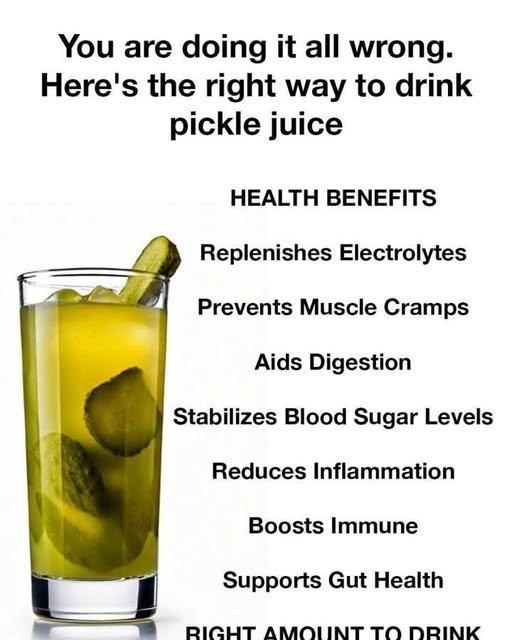
Many people hear that pickle juice is good for cramps, hydration, or recovery, but the “right way” to drink it depends on why you’re drinking it. While pickle juice can have some benefits, it’s also very high in sodium, so moderation is important.
What Is Pickle Juice?
Pickle juice is the liquid left after pickles have been soaked in a mixture of:
- Water
- Vinegar
- Salt
- Herbs and spices (such as dill, garlic, mustard seed, peppercorns)
Some brands also add sugar or preservatives.
Why Do People Drink Pickle Juice?
1. Muscle Cramp Relief
Research suggests that pickle juice may help stop muscle cramps faster than water.
How it works:
- It probably doesn’t work because it instantly replaces electrolytes.
- Instead, the vinegar and strong taste appear to stimulate nerves in the mouth and throat, triggering a reflex that helps calm overactive muscles.
Best practice:
- Drink 1–3 ounces (30–90 mL) when a cramp begins.
- Relief may occur within 1–2 minutes.
2. Electrolyte Replacement
Pickle juice contains:
- Sodium
- Small amounts of potassium
- Trace minerals
After prolonged sweating (such as endurance sports or working in hot weather), sodium replacement can be helpful.
However:
- It is not a complete sports drink.
- It contains very little carbohydrate and relatively little potassium compared with oral rehydration solutions or many sports drinks.
3. Hydration Support
Pickle juice can encourage drinking and help replace sodium lost through sweat.
For most people:
- Drink water first.
- Use pickle juice as a small supplement, not your primary source of hydration.
4. Blood Sugar
Some small studies suggest vinegar may reduce the rise in blood sugar after meals.
If you’re using pickle juice for this purpose:
- Choose unsweetened pickle juice.
- Discuss it with a healthcare professional if you have diabetes or take glucose-lowering medication.
The Right Way to Drink Pickle Juice
Step 1: Choose the Right Pickle Juice
Look for:
- Dill pickle juice
- Fermented or naturally pickled varieties (if desired)
- No added sugar
- Moderate sodium if you’re watching salt intake
Avoid:
- Very sweet pickle brines
- Artificially flavored products if your goal is nutrition
Step 2: Drink Small Amounts
Recommended serving:
- 1–2 ounces (30–60 mL) for general use.
- Up to 3 ounces (90 mL) for muscle cramps.
There’s usually no need to drink an entire jar.
Step 3: Don’t Drink It on an Empty Stomach (if Sensitive)
Because it contains vinegar and salt, pickle juice may cause:
- Heartburn
- Stomach irritation
- Nausea
Having it with food may reduce discomfort.
Step 4: Drink Water Too
Pickle juice does not replace the need for water.
A good approach after heavy sweating is:
- Drink water.
- If you’ve lost a lot of sweat over a long period, have a small amount of pickle juice to replace sodium.
When Is the Best Time to Drink It?
| Goal | Best Time |
|---|---|
| Muscle cramps | At the first sign of a cramp |
| After intense exercise | Within 30 minutes after finishing |
| Hot weather work | During breaks, in small amounts |
| With meals | If using vinegar for blood sugar support |
How Much Is Too Much?
Most people should limit pickle juice to about 1–3 ounces (30–90 mL) at a time unless advised otherwise by a healthcare professional.
Drinking large amounts may lead to:
- Excess sodium intake
- Increased thirst
- Stomach upset
- Temporary bloating
Who Should Be Careful?
Avoid or limit pickle juice if you have:
- High blood pressure that requires sodium restriction
- Kidney disease
- Heart failure
- Conditions requiring a low-sodium diet
If you’re unsure whether it’s appropriate for you, ask your healthcare provider.
Common Myths
Myth: Pickle juice instantly replaces all electrolytes.
Fact: It mainly provides sodium and only small amounts of other electrolytes.
Myth: Drinking lots of pickle juice is healthier.
Fact: More isn’t better. Because it’s high in sodium, moderation is important.
Myth: It cures dehydration by itself.
Fact: Water remains the primary treatment for dehydration, and more severe dehydration may require oral rehydration solutions.
Bottom Line
Pickle juice can be useful in certain situations, especially for helping relieve exercise-related muscle cramps and replacing some sodium lost through heavy sweating. The most effective approach is to drink small amounts (about 1–3 ounces or 30–90 mL) rather than large quantities, continue to drink plenty of water, and avoid relying on pickle juice as your main source of hydration. If you have high blood pressure, kidney disease, or another condition requiring sodium restriction, check with your healthcare provider before making it a regular habit.