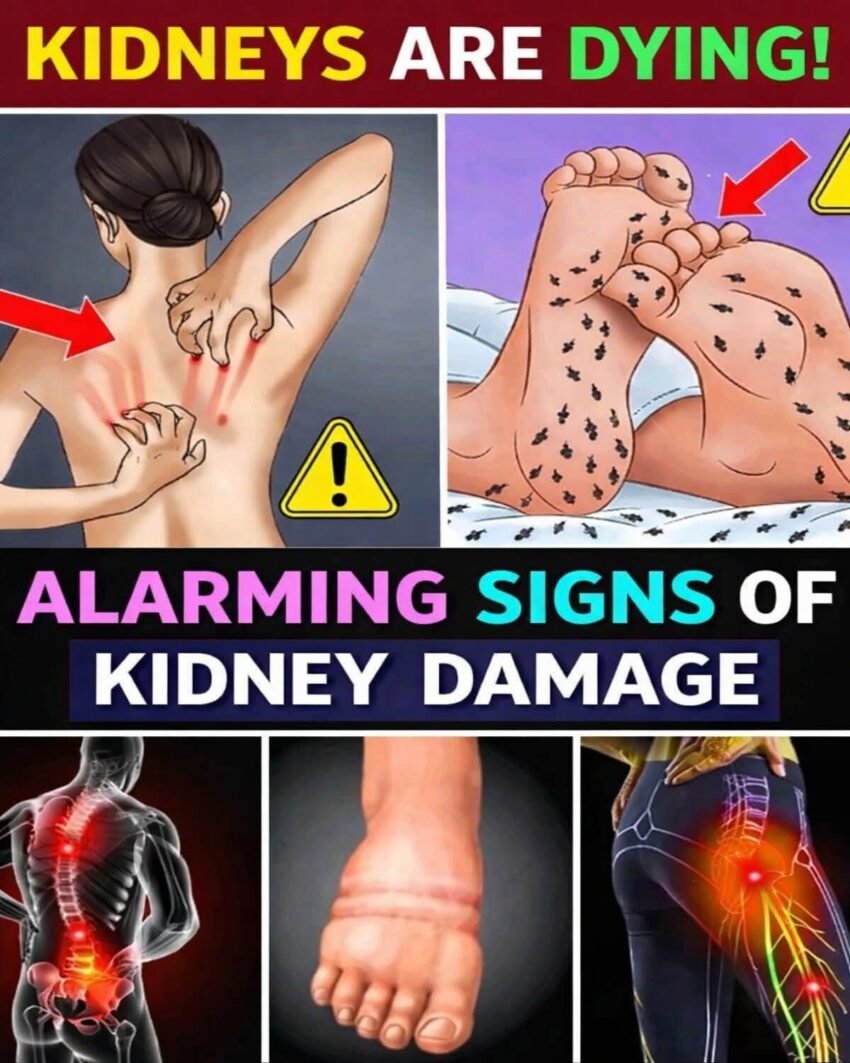
Kidney disease can develop quietly, but there are warning signs that may indicate the kidneys are under serious stress or failing. Below are 15 important (potentially serious) kidney warning signs, explained clearly.
—
1. Swelling in legs, ankles, or face
When kidneys can’t remove excess fluid and salt, fluid builds up in the body.
Puffy eyes in the morning
Swollen feet or ankles
Tight shoes or rings
—
2. Changes in urination
One of the earliest warning areas.
Possible changes:
Urinating more often, especially at night
Very little urine output
Foamy or bubbly urine (protein leakage)
Dark, cloudy, or bloody urine
—
3. Persistent fatigue and weakness
Damaged kidneys reduce production of a hormone called erythropoietin, leading to anemia.
Constant tiredness
Low energy even after rest
Difficulty concentrating
—
4. Shortness of breath
Fluid buildup can enter the lungs or anemia reduces oxygen delivery.
Breathlessness after mild activity
Feeling like you “can’t catch your breath”
—
5. High blood pressure that is hard to control
Kidneys help regulate blood pressure. When damaged:
Blood pressure may rise suddenly
Medications may become less effective
—
6. Loss of appetite
Toxins build up in the blood (uremia), leading to:
Reduced hunger
Early fullness
Weight loss over time
—
7. Nausea and vomiting
Accumulation of waste products in the blood can irritate the stomach.
—
8. Itchy skin (severe and persistent)
Waste buildup and mineral imbalance can cause:
Constant itching
Dry, irritated skin
—
9. Metallic taste in mouth
Toxin buildup may alter taste perception:
Food tastes different or unpleasant
Bad breath (uremic odor)
—
10. Muscle cramps or twitching
Electrolyte imbalances (calcium, potassium, sodium) affect muscles:
Leg cramps, especially at night
Muscle spasms
—
11. Trouble sleeping
Kidney disease can disturb sleep due to:
Itching
Frequent urination
Restless legs
—
12. Puffiness around the eyes
Especially in the morning, caused by protein loss in urine.
—
13. Chest pain or pressure (serious sign)
Fluid around the heart or inflammation may occur in advanced cases.
—
14. Confusion or difficulty thinking
When toxins build up:
Brain fog
Memory problems
Confusion in severe cases
—
15. Sudden decrease in urine output (emergency sign)
This may indicate acute kidney failure:
Very little or no urine
Requires urgent medical attention
—
When to seek medical help urgently
Go to a doctor immediately if you notice:
No urine or very low urine output
Severe swelling
Shortness of breath
Chest pain
Confusion or fainting
—
Important note
These signs can also appear in other conditions (heart disease, liver disease, infections), so they are not a diagnosis on their own. But they are strong reasons to get kidney tests done:
Blood test (creatinine, urea)
Urine test (protein, blood)
Blood pressure check
—
If you want
I can also explain:
Early vs late kidney disease symptoms
Foods that protect kidney health
Natural ways to reduce creatinine safely (evidence-based)
A kidney-friendly diet plan
Just tell me 👍