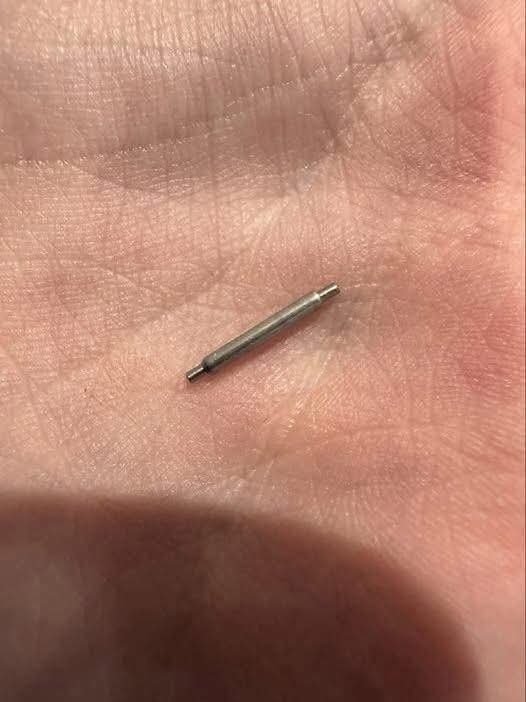
If by metal pin you mean a general-purpose metal pin (such as a fastening, locating, or securing pin used in machinery, construction, electronics, or everyday products), its benefits include:
1. Strong and Durable
Made from metals such as steel, stainless steel, brass, or aluminum.
Can withstand significant loads, pressure, and repeated use.
Less likely to break than plastic alternatives.
2. Secure Fastening
Holds components together firmly.
Prevents parts from shifting, loosening, or separating during operation.
Commonly used in machinery, vehicles, furniture, and tools.
3. Precise Alignment
Dowel pins and locating pins help align parts accurately.
Important in manufacturing where precision is required.
Improves product quality and consistency.
4. Easy Installation and Removal
Many pins can be inserted and removed without specialized equipment.
Simplifies maintenance and repairs.
Reduces downtime in industrial settings.
5. Corrosion Resistance
Stainless steel and coated pins resist rust and corrosion.
Suitable for outdoor, marine, and humid environments.
Extends service life.
6. Cost-Effective
Relatively inexpensive to manufacture.
Long lifespan reduces replacement costs.
Available in many standard sizes.
7. Versatile Applications
Metal pins are used in:
Mechanical equipment
Automotive systems
Aerospace components
Electrical connectors
Jewelry and accessories
Construction projects
Household items
8. High Temperature Resistance
Metal pins can function in environments where plastic fasteners might melt or deform.
Suitable for engines, industrial machinery, and manufacturing equipment.
9. Improved Safety
Locking pins, cotter pins, and retaining pins help prevent accidental disassembly.
Used in critical systems where component failure could be dangerous.
10. Reusable
Many types of metal pins can be removed and reused multiple times.
Reduces waste and lowers operating costs.
Common Types of Metal Pins
Dowel pins – precise alignment.
Cotter pins – locking fasteners.
Spring pins – flexible fastening.
Clevis pins – pivot connections.
Roll pins – securing mechanical parts.
Locking pins – quick-release and safety applications.
The exact benefits depend on the specific type of metal pin, so if you tell me which kind of pin you’re referring to—or share a photo—I can provide more detailed information.