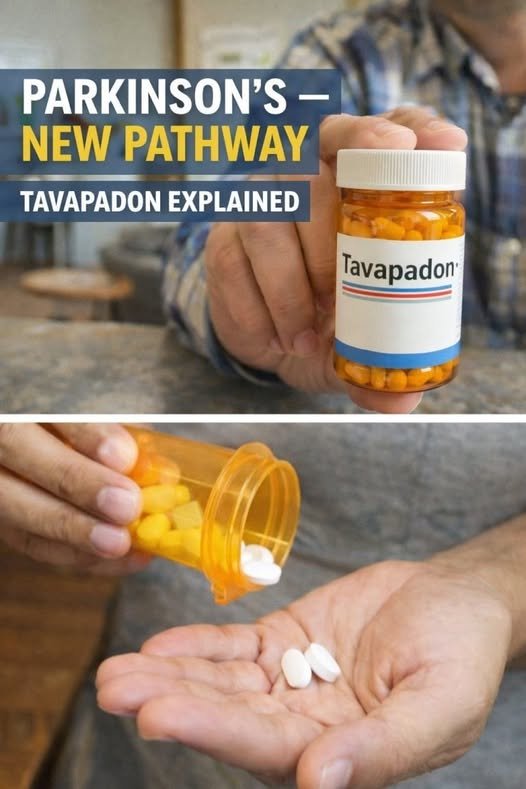
Tavapadon is an investigational medication (and in some regions recently approved for specific uses, depending on local regulatory decisions) designed to treat the motor symptoms of Parkinson’s disease. It belongs to a newer generation of drugs called selective dopamine D1/D5 receptor agonists, which work differently from many existing Parkinson’s medications.
To understand why tavapadon is significant, it helps to first understand what happens in Parkinson’s disease.
Parkinson’s disease and motor symptoms
Parkinson’s disease is a progressive neurological disorder caused primarily by the loss of nerve cells in a part of the brain called the substantia nigra. These cells produce dopamine, a neurotransmitter that helps regulate movement.
As dopamine levels fall, people may develop symptoms such as:
- Tremor (shaking)
- Slowness of movement (bradykinesia)
- Muscle stiffness (rigidity)
- Problems with walking and balance
- Reduced facial expression
- Difficulty with fine motor tasks such as writing or buttoning clothes
Motor symptoms usually worsen gradually over time.
Current treatments and their limitations
Levodopa
The most effective treatment remains levodopa, which the brain converts into dopamine.
Benefits include:
- Strong improvement in movement
- Rapid symptom relief
- Effective for many years
However, after prolonged treatment many patients develop:
- Wearing-off between doses
- Fluctuating symptom control
- Dyskinesias (involuntary movements)
Traditional dopamine agonists
Other medications include dopamine agonists such as:
- Pramipexole
- Ropinirole
- Rotigotine
These drugs stimulate dopamine receptors directly rather than replacing dopamine.
Although useful, they may cause:
- Sleepiness
- Hallucinations
- Swelling of the legs
- Low blood pressure
- Impulse control disorders (such as compulsive gambling or shopping)
They activate several dopamine receptor types, which may contribute to these side effects.
What makes tavapadon different?
Tavapadon is designed to selectively activate D1 and D5 dopamine receptors while largely avoiding D2-type receptors.
Scientists believe this may better mimic some of the brain pathways involved in normal movement.
This selectivity is the main reason tavapadon has attracted attention.
How tavapadon works
The brain contains several dopamine receptor families:
- D1
- D2
- D3
- D4
- D5
Most currently available dopamine agonists mainly stimulate D2 and D3 receptors.
Tavapadon primarily activates:
- D1 receptors
- D5 receptors
Activation of these receptors improves signalling through the direct motor pathway, which helps initiate and control voluntary movement.
Researchers hope this targeted approach may improve motor function while potentially reducing some unwanted effects associated with broader dopamine stimulation.
Potential advantages
Clinical studies suggest tavapadon may offer several potential benefits.
1. Improved motor function
Patients receiving tavapadon have shown improvements in:
- Walking
- Movement speed
- Daily activities
- Tremor
- Rigidity
These improvements are typically measured using standardized Parkinson’s rating scales.
2. Once-daily dosing
Tavapadon has been developed as a once-daily oral medication, which may simplify treatment compared with drugs requiring multiple daily doses.
3. May delay levodopa use
For people with early Parkinson’s disease, starting with another effective therapy may postpone the need for levodopa, although treatment decisions are individualized and levodopa remains an excellent option for many patients.
4. Add-on treatment
Researchers have also studied tavapadon as an add-on to levodopa for people experiencing “OFF” periods—times when medication effects wear off and symptoms return.
Clinical trial findings
Large Phase 3 clinical trials have evaluated tavapadon in people with Parkinson’s disease.
Results have shown:
- Significant improvement in motor symptoms compared with placebo.
- Better scores on measures of daily functioning.
- Reduced “OFF” time when added to levodopa in some studies.
- Generally manageable side effects for many participants.
As with all medicines, individual responses vary, and ongoing post-approval monitoring continues to assess long-term safety and effectiveness where the drug is approved.
Possible side effects
Like other dopamine-related medicines, tavapadon can cause side effects.
Reported adverse effects include:
Common:
- Nausea
- Dizziness
- Headache
- Sleepiness
- Dry mouth
- Constipation
Less common but important:
- Hallucinations
- Low blood pressure when standing
- Confusion
- Abnormal dreams
As with other dopamine agonists, healthcare providers also monitor for impulse-control problems (such as compulsive gambling, shopping, eating, or increased sexual urges), although the risk profile continues to be evaluated.
Who might benefit?
Tavapadon may be considered for:
- People with early Parkinson’s disease who need treatment for motor symptoms.
- People already taking levodopa who experience wearing-off or “OFF” periods.
- Patients seeking a once-daily oral treatment option, where appropriate and available.
The best choice depends on factors such as age, symptom severity, other medical conditions, medication tolerance, and local regulatory approval.
Comparison with other Parkinson’s medications
| Medication | Main mechanism | Typical use | Key consideration |
|---|---|---|---|
| Levodopa | Converted to dopamine | Most stages | Most effective for symptom control, but long-term motor fluctuations can occur |
| Pramipexole | D2/D3 agonist | Early Parkinson’s and add-on therapy | Effective but may cause sleepiness and impulse-control disorders |
| Ropinirole | D2 agonist | Early disease and add-on therapy | Similar benefits and risks to other D2 agonists |
| Rotigotine | D2 agonist (transdermal patch) | Continuous drug delivery | Useful for some patients who prefer a patch |
| Tavapadon | Selective D1/D5 agonist | Early disease and add-on therapy (where approved) | Newer approach targeting D1/D5 receptors |
Is tavapadon a cure?
No. Tavapadon does not cure Parkinson’s disease or stop the underlying loss of dopamine-producing nerve cells. Its goal is to improve motor symptoms and help people function better in daily life.
Research is ongoing to determine whether it has any effect on disease progression, but there is currently no conclusive evidence that it slows or halts the disease.
Key takeaways
- Tavapadon is a selective dopamine D1/D5 receptor agonist developed to improve the motor symptoms of Parkinson’s disease.
- Unlike traditional dopamine agonists that mainly target D2/D3 receptors, it focuses on D1/D5 receptors, offering a different approach to restoring movement-related brain signalling.
- Clinical trials have shown improvements in motor symptoms and, in some patients, reduced “OFF” time when used alongside levodopa.
- It is not a cure for Parkinson’s disease, and long-term experience is still accumulating as it becomes available in clinical practice.
- As with all Parkinson’s medications, treatment should be tailored to the individual, weighing potential benefits against possible side effects and considering overall health and treatment goals.