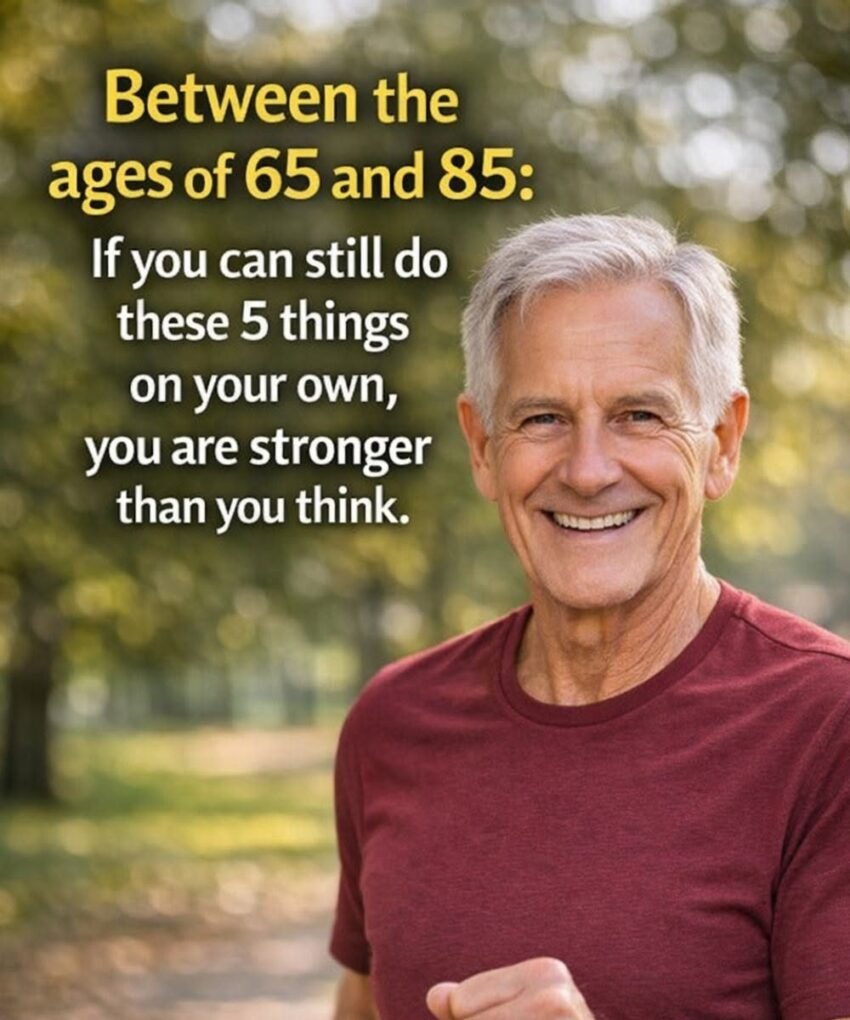
Being able to stay independent between the ages of 65 and 85 often reflects a combination of physical strength, balance, cognitive health, and overall fitness. While aging affects everyone differently, many healthcare professionals use everyday activities to assess how well a person is aging. If you can still do the following five things on your own, it generally suggests you’re maintaining a good level of functional independence.
1. Get Up from a Chair Without Using Your Hands
This is a simple but meaningful indicator of lower-body strength and balance.
Why it matters:
- Strong leg muscles help prevent falls.
- It shows good hip and knee function.
- It’s associated with maintaining independence.
How to test yourself:
- Sit in a sturdy chair.
- Cross your arms over your chest.
- Stand up without pushing off with your hands.
If you can do this comfortably several times, your leg strength is likely in good shape.
2. Walk Briskly for 10–15 Minutes
Walking is one of the best measures of overall health.
Benefits of maintaining this ability:
- Supports heart and lung health.
- Helps preserve muscle strength.
- Improves balance and endurance.
- Reduces the risk of chronic diseases.
Many studies have found that walking speed is linked to healthy aging, with slower walking sometimes indicating declining physical function.
3. Climb a Flight of Stairs
Climbing stairs requires:
- Strong leg muscles.
- Good cardiovascular fitness.
- Balance and coordination.
If you can climb one or two flights of stairs without needing a long rest, it suggests you’re maintaining good functional fitness.
4. Carry Everyday Groceries
Being able to carry shopping bags or household items shows practical strength.
This involves:
- Grip strength.
- Arm and shoulder strength.
- Core stability.
- Balance.
Grip strength, in particular, has been studied as an indicator of overall muscle health and is associated with better long-term health outcomes.
5. Manage Daily Activities Independently
This includes tasks such as:
- Dressing yourself.
- Bathing.
- Preparing meals.
- Taking medications correctly.
- Managing finances.
- Shopping.
- Using the phone.
Healthcare providers often evaluate these “activities of daily living” because they are strong indicators of independence and quality of life.
Other Positive Signs of Healthy Aging
You may also be doing well if you can:
- Maintain good balance while standing on one foot for several seconds.
- Remember appointments and conversations.
- Stay socially active.
- Sleep reasonably well.
- Recover after moderate physical activity.
- Continue learning new skills or hobbies.
Habits That Help Maintain These Abilities
Even in your 70s and 80s, these habits can support independence:
- Strength training 2–3 times per week.
- Walking regularly.
- Eating enough protein.
- Staying hydrated.
- Getting adequate sleep.
- Challenging your mind with reading, puzzles, or learning.
- Maintaining social connections.
- Having regular medical checkups and vision/hearing assessments.
A Few Important Notes
Being unable to do one or more of these activities does not necessarily mean someone is unhealthy. Temporary injuries, arthritis, joint replacements, neurological conditions, heart disease, or other medical issues can affect function. These abilities are useful indicators, but they are not a complete measure of health or longevity.
Healthy aging is less about meeting a specific benchmark and more about preserving the ability to live safely, comfortably, and independently for as long as possible. If you notice a new or progressive decline in strength, balance, or daily function, it’s a good idea to discuss it with a healthcare professional, as targeted exercise, rehabilitation, or treatment can often help maintain or improve independence.