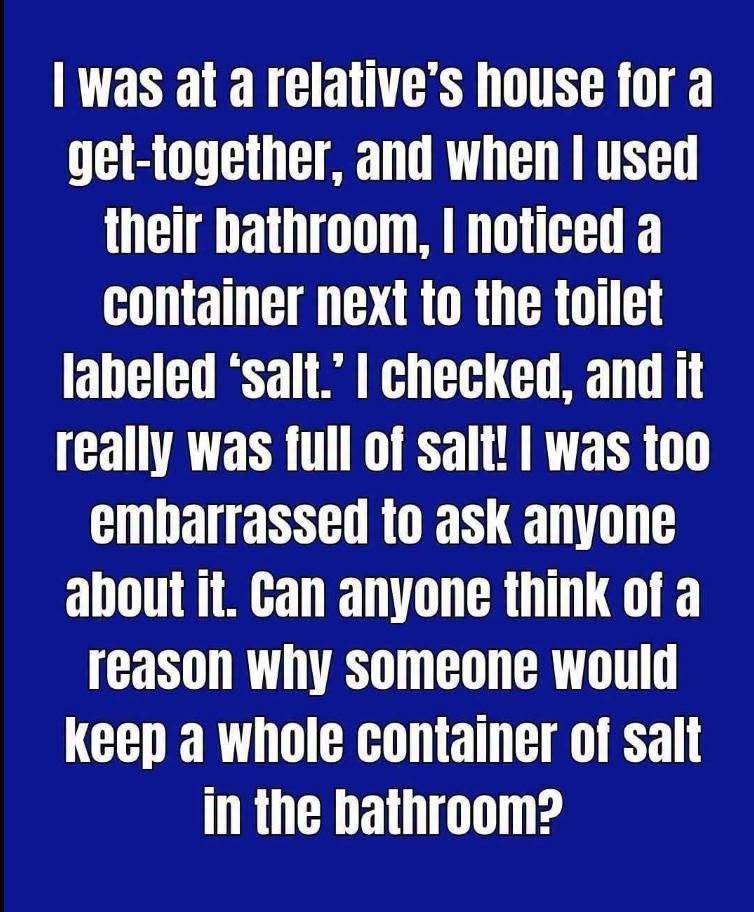
Why Putting Salt in Your Toilet Is a Little-Known Tip From Plumbers
You may have seen advice suggesting that pouring salt into your toilet can help clean the bowl, reduce odors, remove certain stains, or keep your bathroom fresher. Salt is inexpensive and readily available, which makes this household tip appealing.
But does putting salt in your toilet actually work, and do plumbers really recommend it? The answer depends on what you want to achieve. Salt has a few useful properties, but many claims about its cleaning power are exaggerated.
1. What does salt actually do in a toilet?


Ordinary table salt is sodium chloride (NaCl). It can help with some simple household cleaning tasks, but it is not a specialized toilet cleaner, disinfectant, or drain treatment.
Here is what you should know about the most common claims.

1. Helping with mild surface grime
Salt crystals can provide a small amount of physical abrasion when used appropriately on a compatible surface. However, simply pouring salt into toilet water does very little to scrub the bowl, because the crystals quickly dissolve or settle without much friction.

2. Addressing toilet bowl stains
Some people use salt in an attempt to remove yellow or brown rings. However, salt does not effectively dissolve the calcium carbonate and other mineral deposits responsible for many hard-water stains. A suitable toilet-bowl descaler or manufacturer-approved acidic cleaner is generally more effective.

3. Reducing unpleasant odors
Salt does not neutralize most odor-causing compounds at the concentrations produced by a typical household salt treatment. If your toilet smells bad even after cleaning, the cause could be a dirty rim, a drain issue, a faulty seal, or a plumbing vent problem.

4. Keeping drains clear
This is one of the most misleading claims. Salt does not dissolve hair, toilet paper buildup, wipes, or other common causes of blockages. It is not a substitute for proper drain cleaning or plumbing repairs.
2. The surprising reason some articles recommend salt: tree roots in sewer pipes


One reason this tip circulates online is the claim that rock salt can help control tree roots that have entered underground sewer pipes.
Here is the science behind that claim.
How tree roots enter pipes
-
Tree roots naturally grow toward moisture and nutrients in the surrounding soil.
-
If a sewer pipe has cracks, loose joints, or other damage, moisture may escape.
-
Roots can grow into those openings and gradually expand, trapping toilet paper and other waste.
-
As the obstruction grows, you may notice slow drainage, gurgling sounds, recurring toilet blockages, or sewage backups.
Why salt is mentioned
Salt in sufficiently high concentrations draws water out of plant cells through osmosis. This can dehydrate and damage plant tissue.
That explains why some online articles suggest sending rock salt through a toilet to kill roots in sewer lines.
However, this is not a reliable or recommended general-purpose plumbing treatment. Pouring salt into a toilet does not guarantee that it will reach the roots, kill them effectively, or remove the obstruction. It also cannot repair a cracked pipe.
If tree-root intrusion is suspected, a plumber can inspect the drain with a sewer camera and recommend appropriate root removal and pipe repair. Avoid pouring large quantities of salt into your plumbing, particularly if your home has a septic system.
3. Can salt unclog a toilet?

Usually, no.
Salt does not break down toilet paper, wipes, hair, or solid objects in the way needed to clear a typical blockage. Even mixing it with hot water or other household ingredients does not make it a dependable drain opener.
A more effective approach depends on the cause:
-
For a normal toilet clog: Use a toilet plunger designed to seal around the bowl outlet.
-
For a stubborn blockage: Use a toilet auger, following its instructions, or contact a plumber.
-
For recurring clogs: Have the toilet and drain line checked for a partial obstruction, mineral buildup, or pipe damage.
-
For multiple slow drains or sewage backups: Stop repeatedly flushing and seek professional plumbing assistance.
The EPA advises homeowners with septic systems to flush only human waste and toilet paper, because other items can obstruct the plumbing or damage the system.
4. Does salt remove yellow stains and hard-water rings?

It depends on the type of stain, but salt is generally not the best choice.
|
Type of stain |
Does salt work well? |
Better approach |
|---|---|---|
|
Light surface grime |
Limited benefit |
Toilet brush and toilet cleaner |
|
Yellow hard-water ring |
Generally ineffective |
Suitable limescale remover |
|
White, chalky mineral deposits |
Poor choice |
Toilet-safe descaling product |
|
Orange or reddish rust stains |
Generally ineffective |
Cleaner labeled for rust stains |
|
Dark organic buildup |
Not a reliable disinfectant |
Appropriate toilet cleaner and brushing |
Hard-water stains often form when dissolved minerals in water accumulate on the porcelain. Salt does not chemically dissolve these deposits effectively.
For mineral scale, use a product specifically labeled for toilet bowls and the relevant type of buildup. Follow the label and your toilet manufacturer’s instructions.
Safety warning: Never mix bleach with vinegar, acids, ammonia, or other toilet-cleaning products. Dangerous gases can be released. If switching products, follow the label’s rinsing and ventilation instructions.
5. Does salt eliminate bad toilet smells?
Salt is sometimes promoted as a natural deodorizer, but there is an important distinction between temporarily masking an odor and eliminating its source.
If your toilet smells unpleasant, consider these possible causes:
-
Residue beneath the rim: Organic material can accumulate in areas that are difficult to reach with a brush.
-
Dirty toilet brush or holder: These can retain moisture and develop unpleasant smells.
-
A problem with the toilet seal: A damaged wax ring or other failed seal at the toilet base can allow sewer gases to escape.
-
A plumbing vent problem: A blocked or malfunctioning vent can interfere with proper drainage and allow odors to enter the bathroom.
-
A dry drain trap: In an infrequently used nearby sink or floor drain, water can evaporate and allow sewer odors to pass through.
Salt will not fix a failed seal, restore a dry trap, or repair a vent. If the odor resembles sewage and persists after cleaning, investigate the plumbing rather than repeatedly adding household ingredients.
6. What about mixing salt with baking soda and vinegar?

A popular online recipe combines salt, baking soda, and vinegar. The idea is that the ingredients will work together to clean the toilet or clear a drain.
Here is what actually happens:
-
Salt: Primarily provides dissolved sodium and chloride ions; it is not a powerful drain-cleaning chemical.
-
Baking soda: Is mildly alkaline and can help with some cleaning tasks.
-
Vinegar: Contains acetic acid and can help dissolve some mineral deposits.
-
The combination: Baking soda reacts with vinegar, producing carbon dioxide bubbles, water, and sodium acetate.
The fizzing may look impressive, but it does not necessarily mean the mixture is removing a blockage. Because the acid and baking soda react with each other, mixing them also reduces the amount of each ingredient available to perform its original cleaning function.
For a toilet bowl, a suitable toilet cleaner and a brush are generally more effective. For a clog, use a plunger or toilet auger instead.
Never combine this mixture with bleach or other cleaning chemicals.
7. Is putting salt in your toilet safe?
A small amount of ordinary salt is unlikely to cause an immediate problem in a typical household toilet. However, that does not mean repeatedly flushing large quantities is a good maintenance practice.
|
Situation |
Practical advice |
|---|---|
|
Standard household toilet |
Salt is generally unnecessary |
|
Septic system |
Avoid unnecessary additives and follow septic maintenance guidance |
|
Old or damaged plumbing |
Avoid experimental treatments; ask a plumber |
|
Suspected tree-root intrusion |
Arrange a drain inspection |
|
Persistent clog |
Use appropriate mechanical tools or seek professional help |
|
Toilet with stubborn mineral deposits |
Use a compatible toilet-safe descaler |
The US Environmental Protection Agency recommends careful management of materials entering septic systems and advises flushing only human waste and toilet paper.
There is also no good reason to make salt a routine weekly or monthly toilet treatment. It has no established benefit that justifies that habit.
8. What plumbers are more likely to recommend

For everyday cleanliness
Clean the bowl regularly with a toilet-safe cleaner and brush. Clean beneath the rim and around the seat hinges, and follow the product instructions.

For blockages
Use a flange-style toilet plunger. If that fails, a toilet auger can help remove obstructions without relying on questionable chemical remedies.

For recurring plumbing problems
Ask a plumber to inspect the drain line, especially if clogs keep returning or multiple fixtures drain slowly.

For preventing problems
Flush only human waste and toilet paper, repair leaks promptly, and maintain any septic system according to professional recommendations.
9. Common myths about putting salt in a toilet
-
Myth: Salt disinfects the toilet. Ordinary household salt at typical use levels is not a reliable toilet disinfectant.
-
Myth: Salt dissolves every kind of clog. It does not reliably dissolve toilet paper blockages, wipes, or solid objects.
-
Myth: Salt prevents all tree-root problems. It cannot prevent roots from entering damaged pipes or repair existing damage.
-
Myth: Salt eliminates sewer odors. It will not correct a leaking seal or a ventilation problem.
-
Myth: More salt means better cleaning. Large quantities are unnecessary and may create avoidable plumbing or wastewater concerns.
Final verdict: Should you put salt in your toilet?
For routine toilet cleaning, it is generally not worth doing. Salt is cheap, but its benefits are limited, and it is not a substitute for proper cleaning or plumbing maintenance.
The most important distinction is what problem you are trying to solve:
-
For a dirty bowl, use a toilet cleaner and brush.
-
For hard-water stains, use a suitable descaler.
-
For a clogged toilet, use a plunger or toilet auger.
-
For persistent sewer odors or recurring blockages, have the plumbing inspected.
-
For suspected roots in sewer pipes, seek professional diagnosis rather than relying on salt.
The idea behind the salt trick has a little scientific basis in the way concentrated salt affects plant tissue, but the broader claims about cleaning, unclogging, and deodorizing toilets are often overstated.
In short, the best plumbing tip is not to add more ingredients to your toilet, but to identify the actual problem and use the right solution.